Courtyard House
New build family house in West Sussex
Key Materials / Lime render, concrete and oak
Architecture / Angela Marquito Architecture
Structural Engineer / Constant Structural Design
Client / Private
Photography / Ståle Eriksen
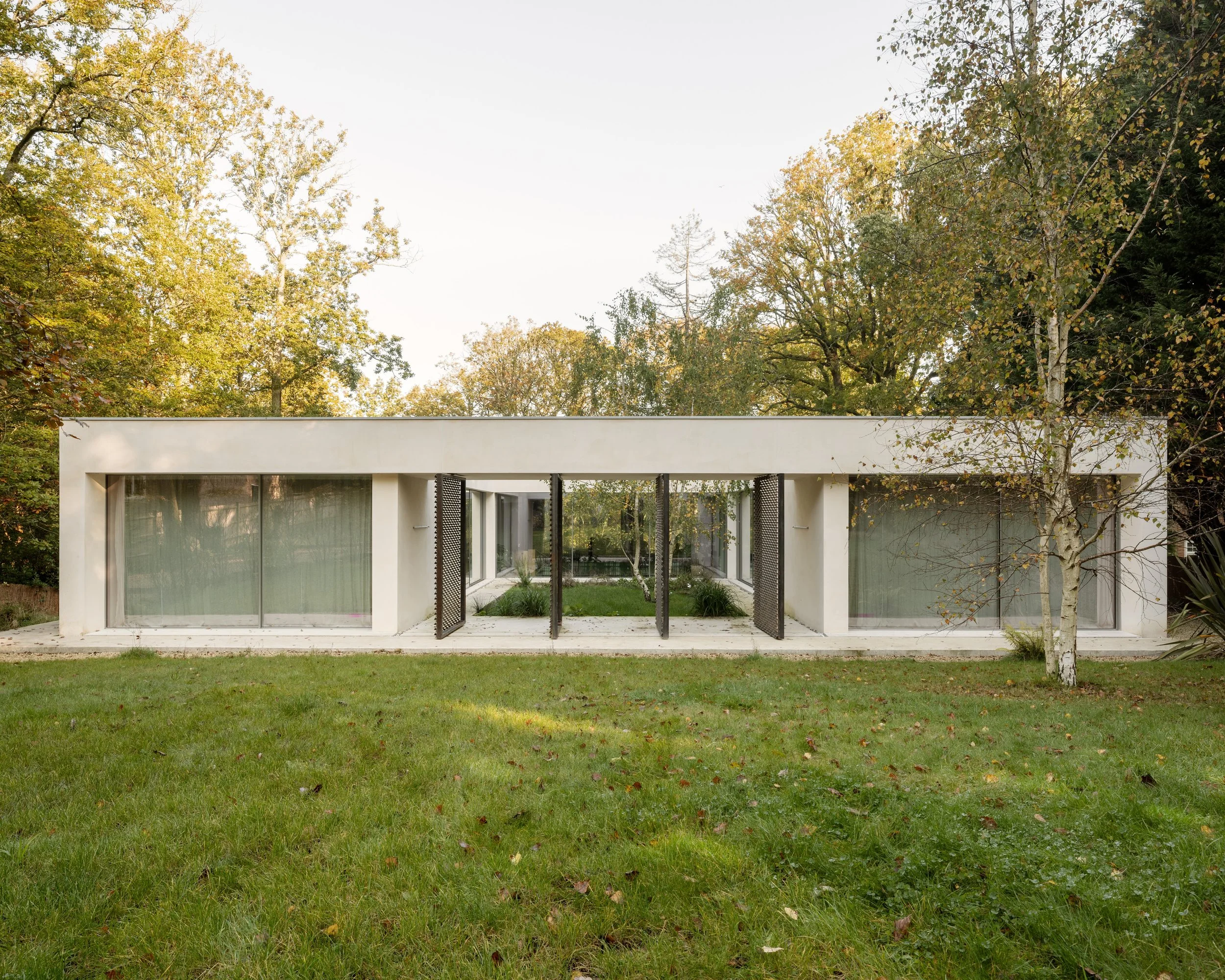
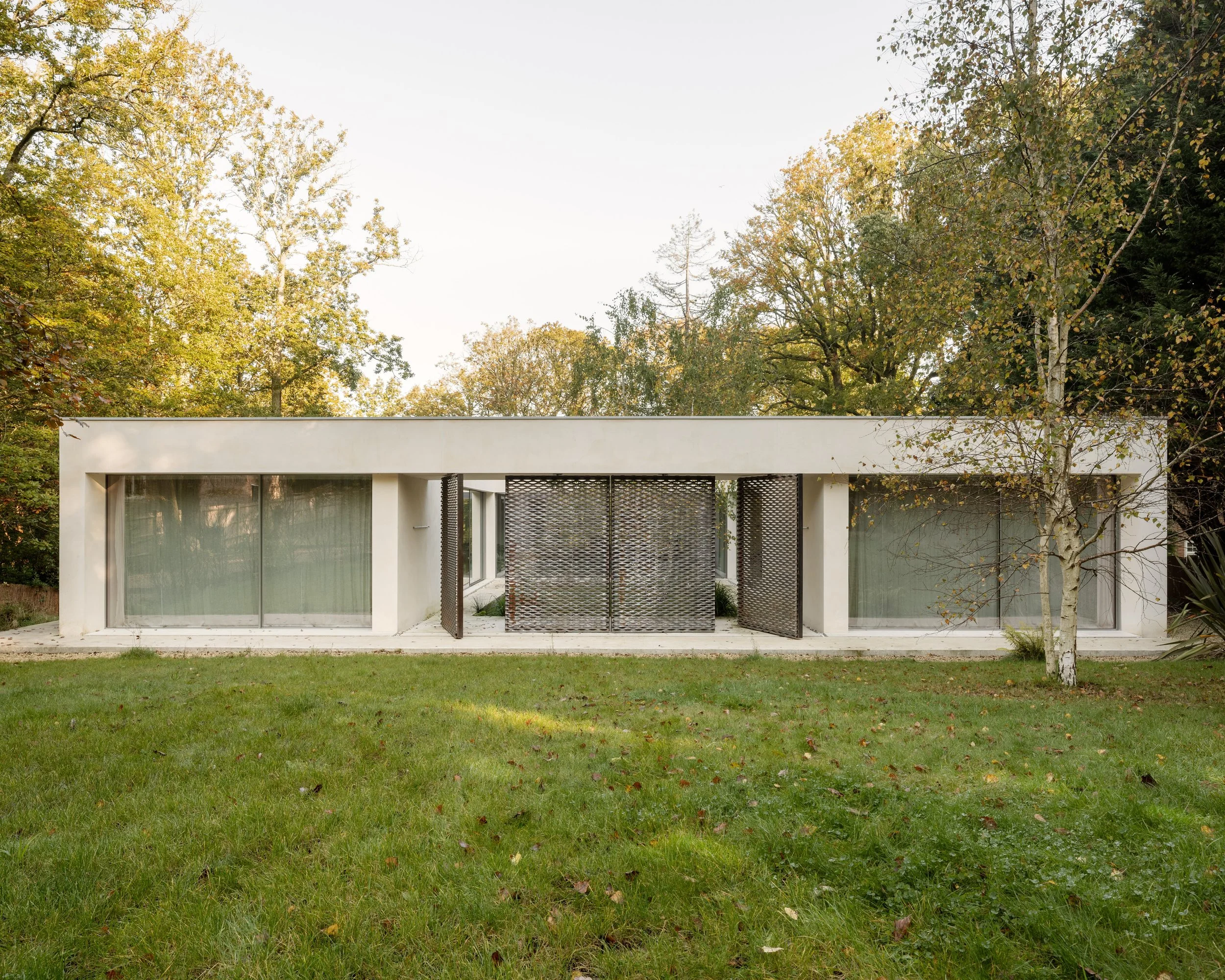
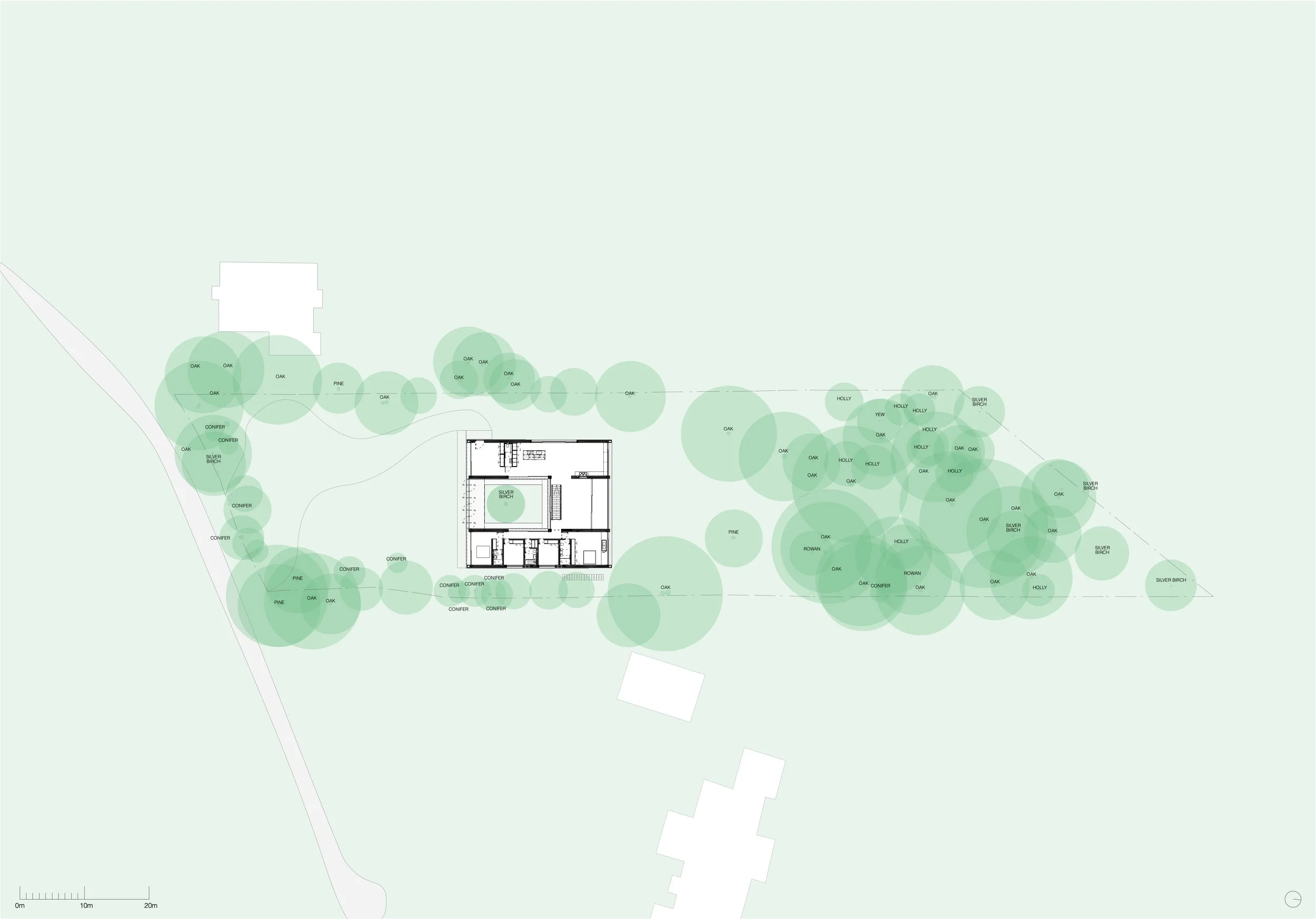
Set on the edge of ancient woodland in West Sussex, the brief was to design a courtyard house for a family of five within a forest clearing.
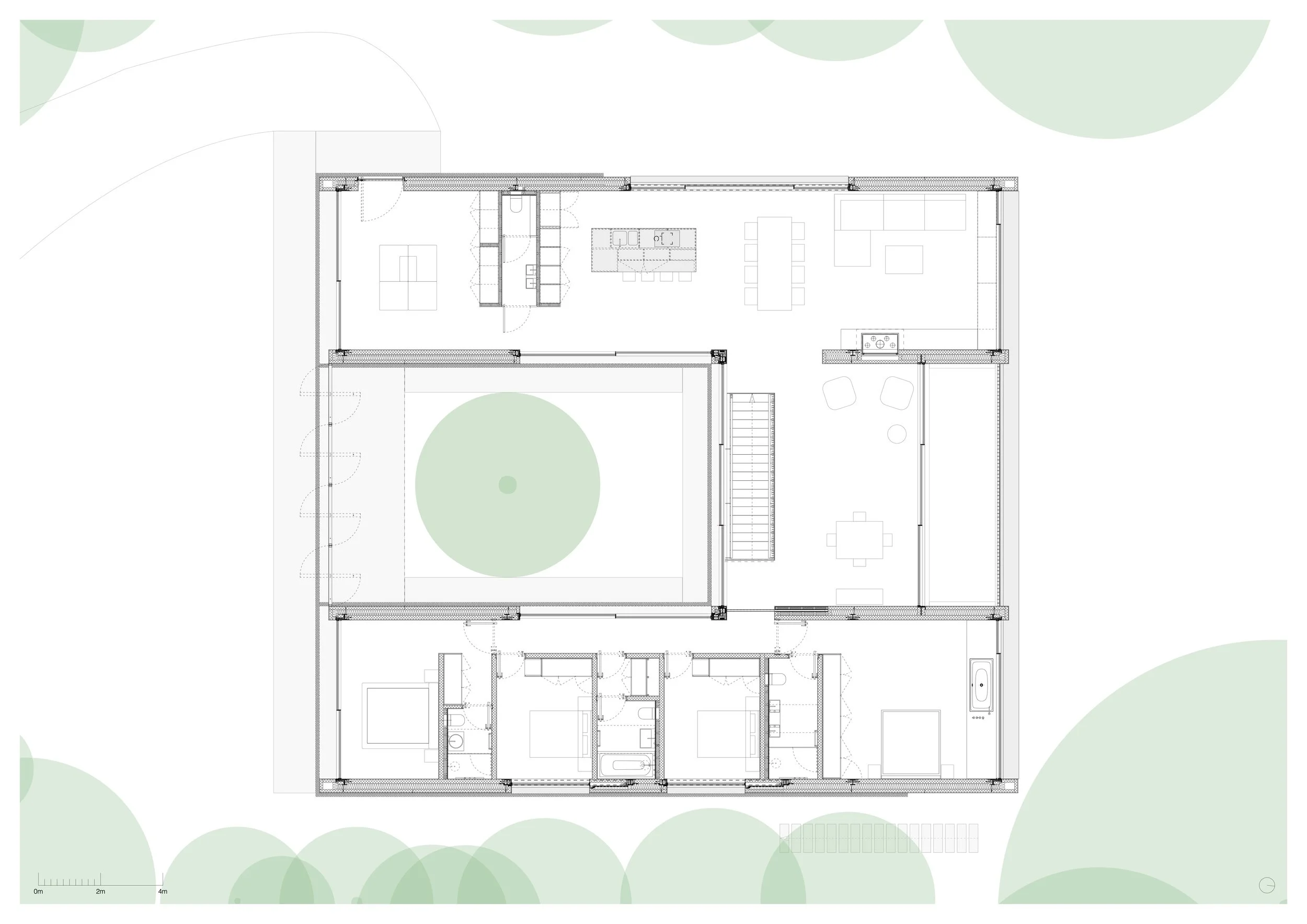
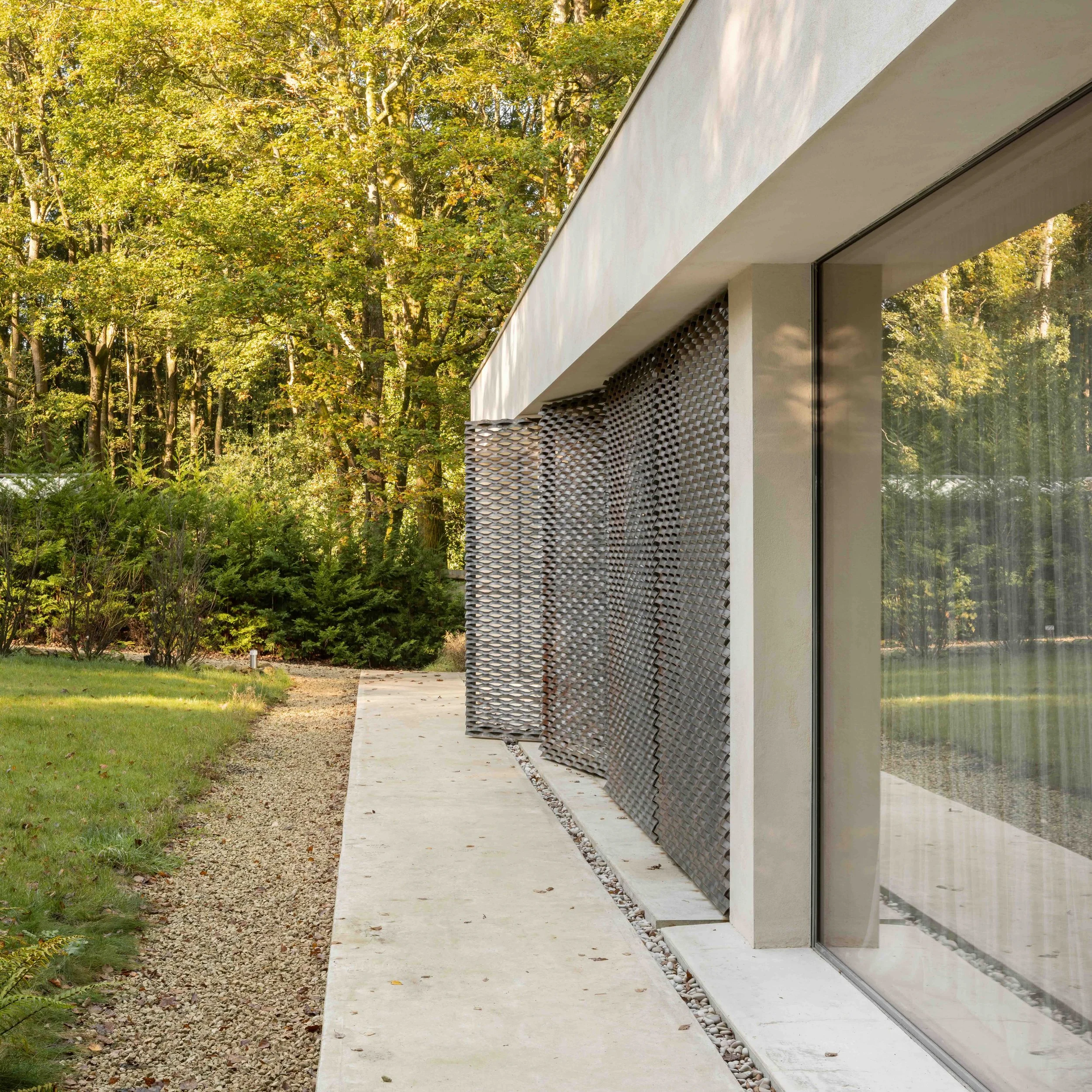
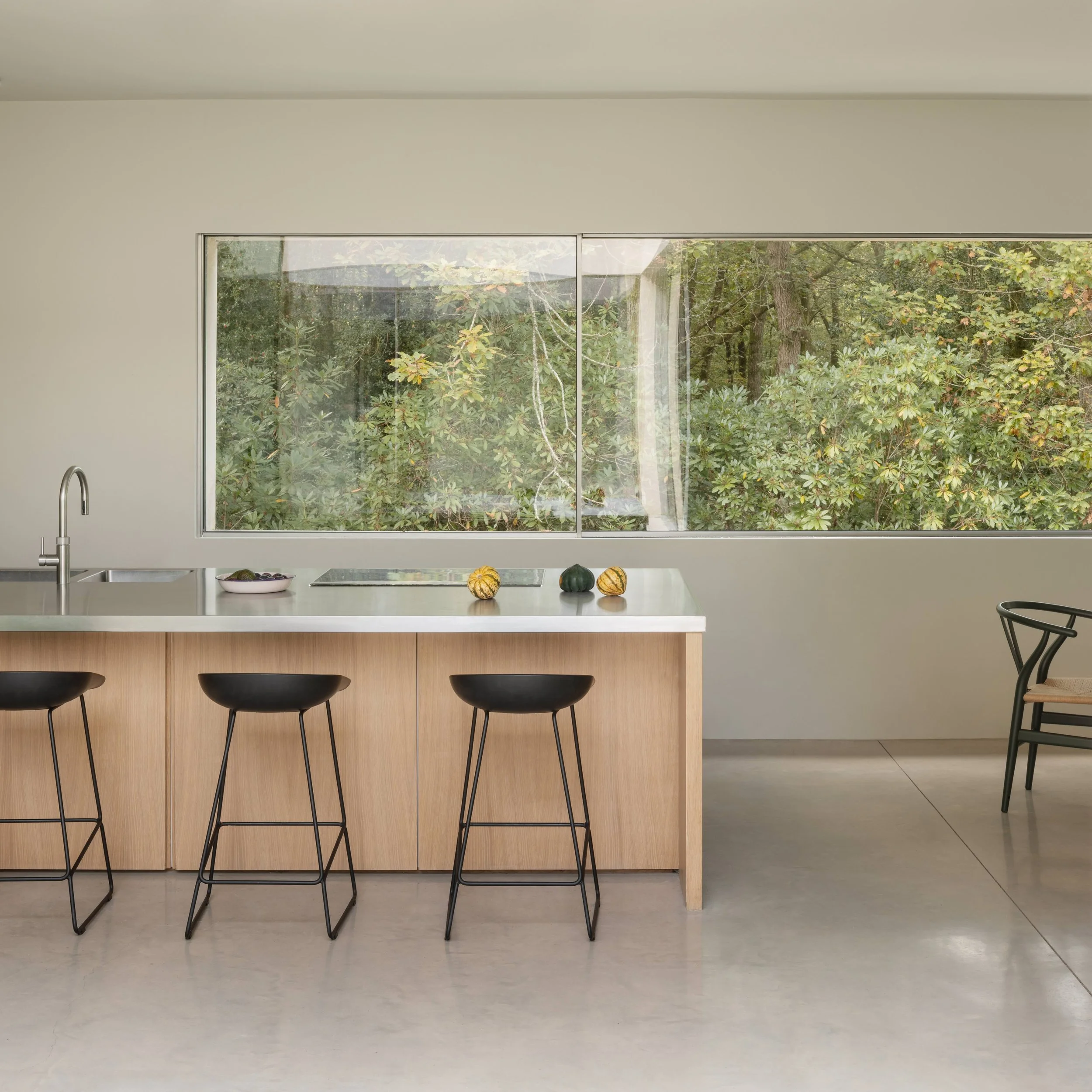
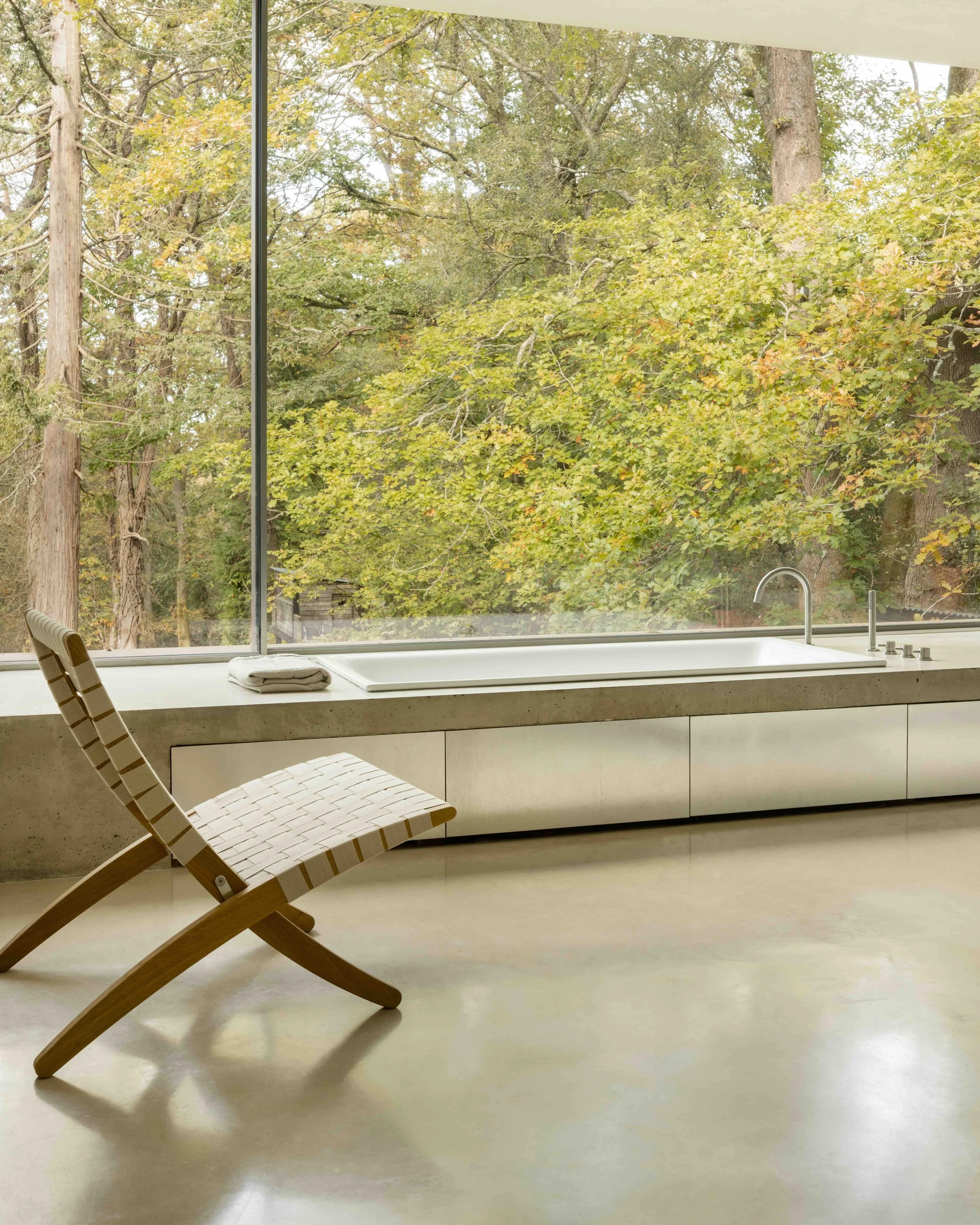
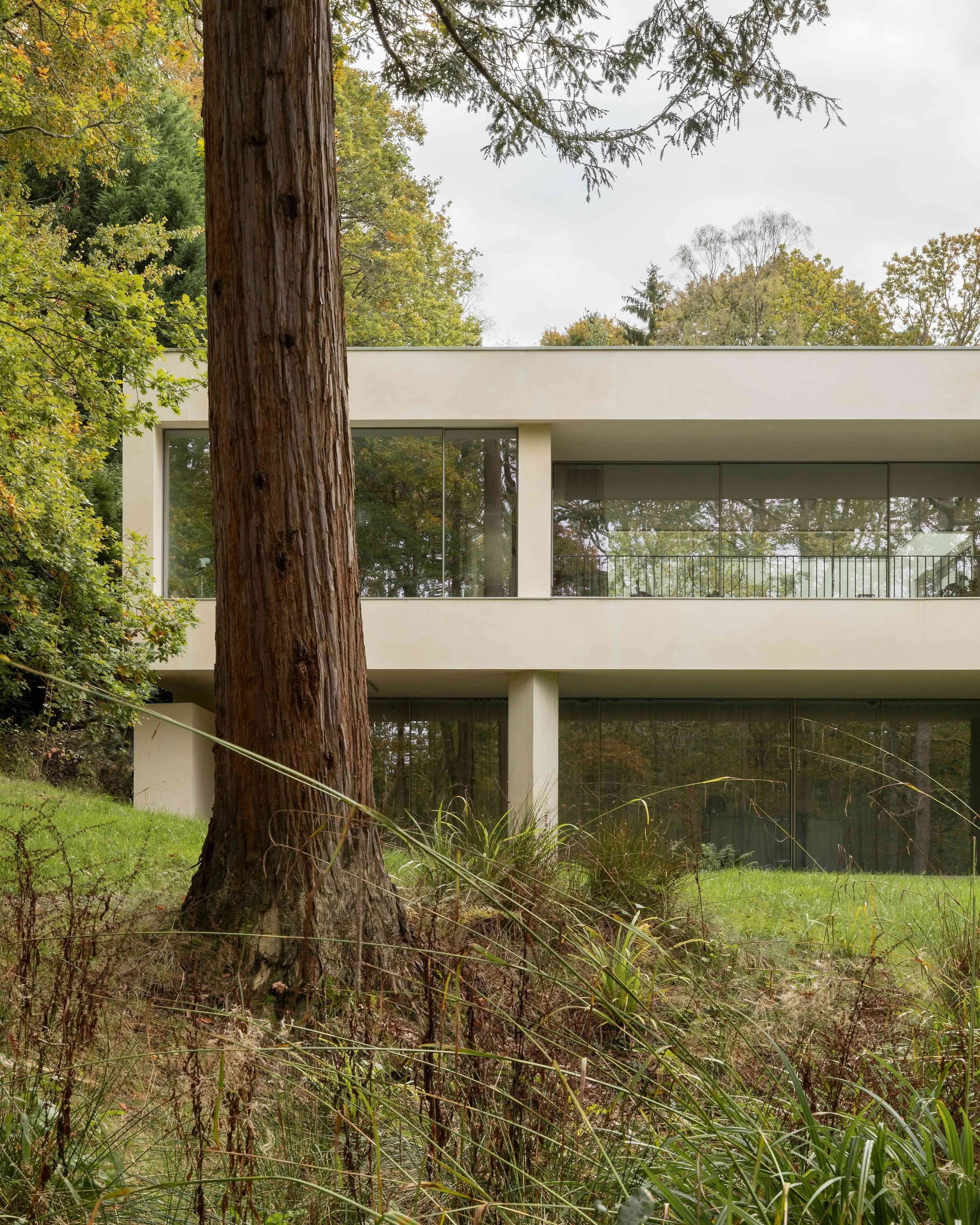
The site, long and narrow, sloping fairly steeply from South to North, was initially studied in a series of maquettes. With sunlight and heat coming primarily from South, East, and West and spectacular views to the wilder woodland at the North, the design strategy was to capture sun through a fully openable courtyard to the South, while framing views to the North.
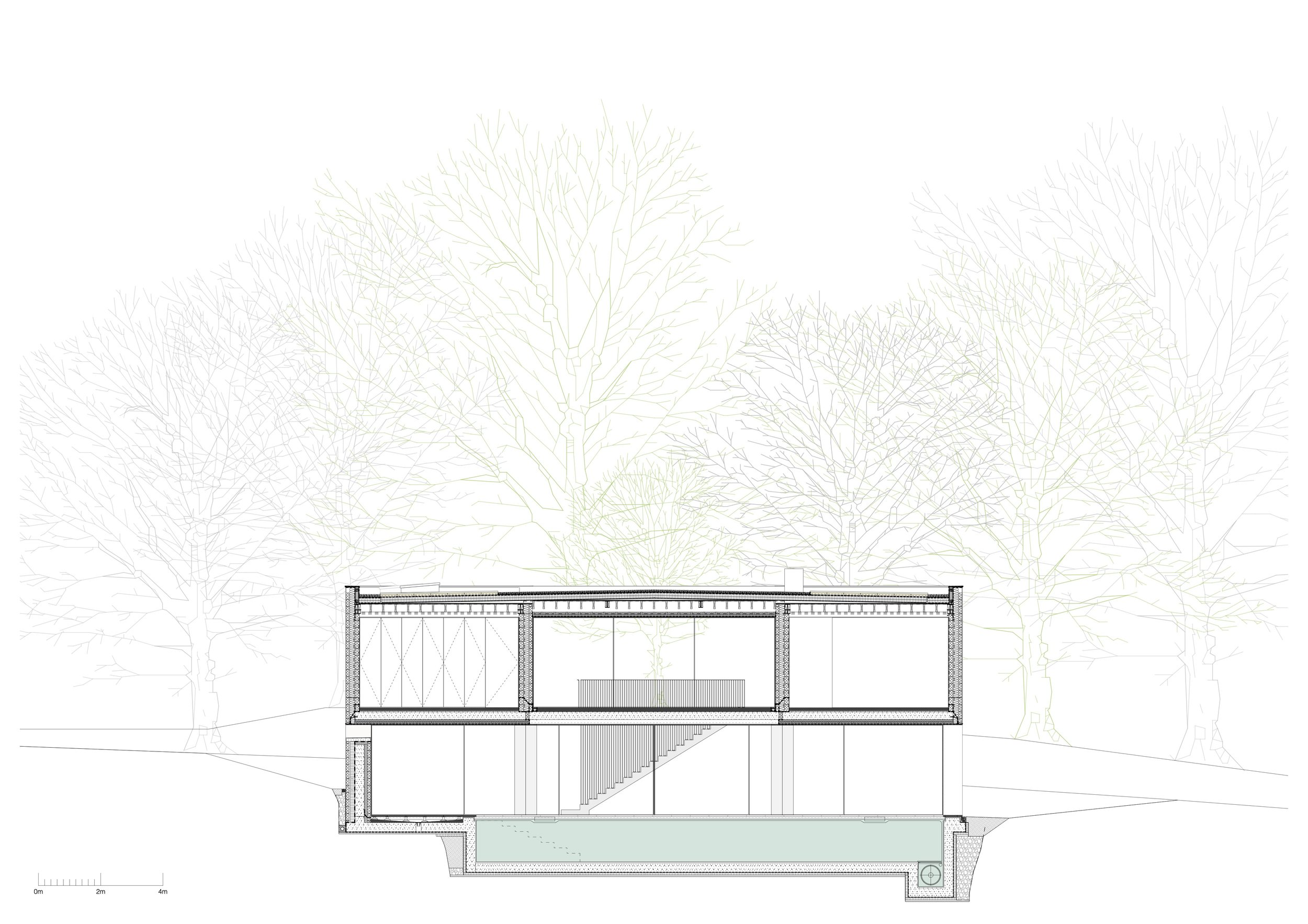
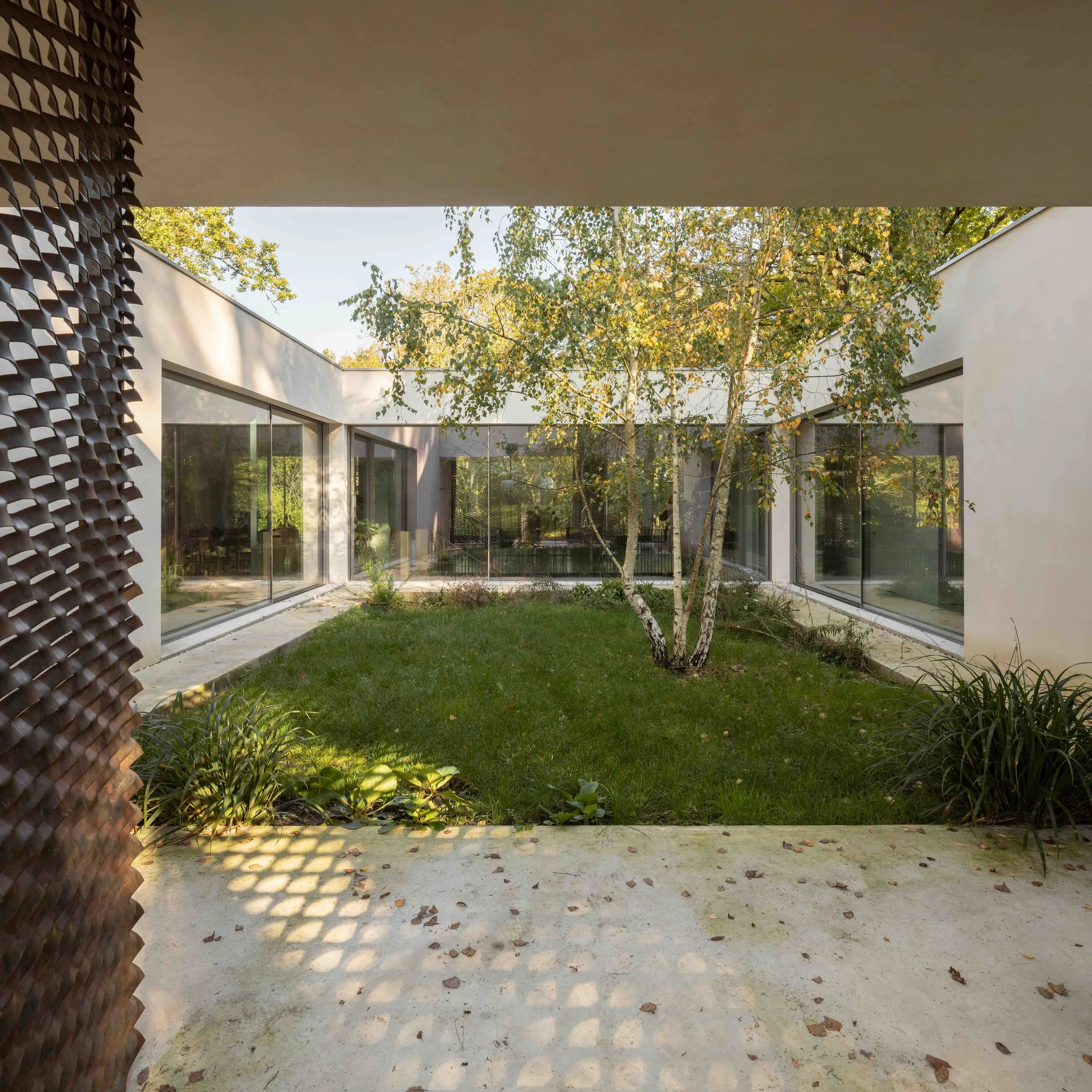
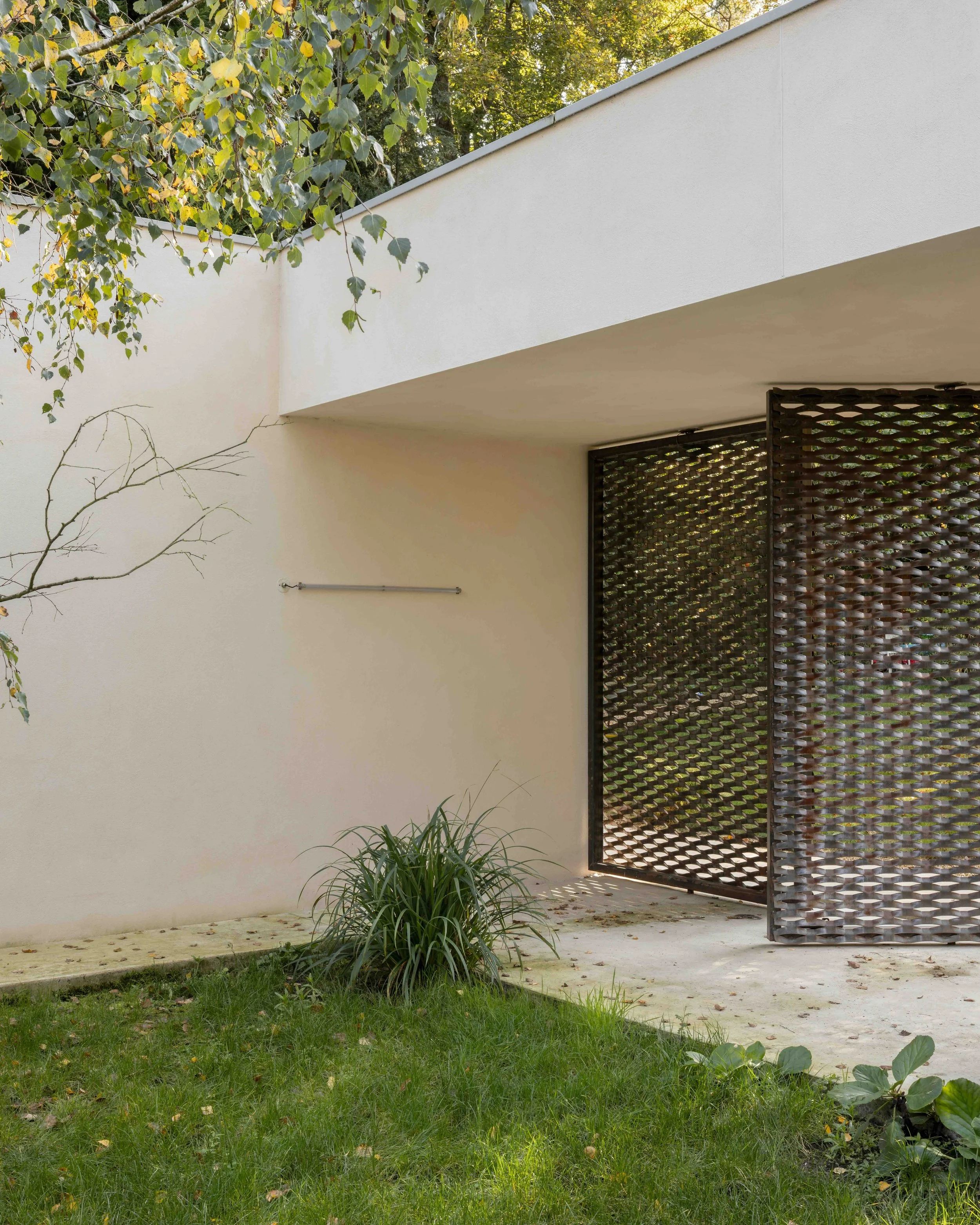
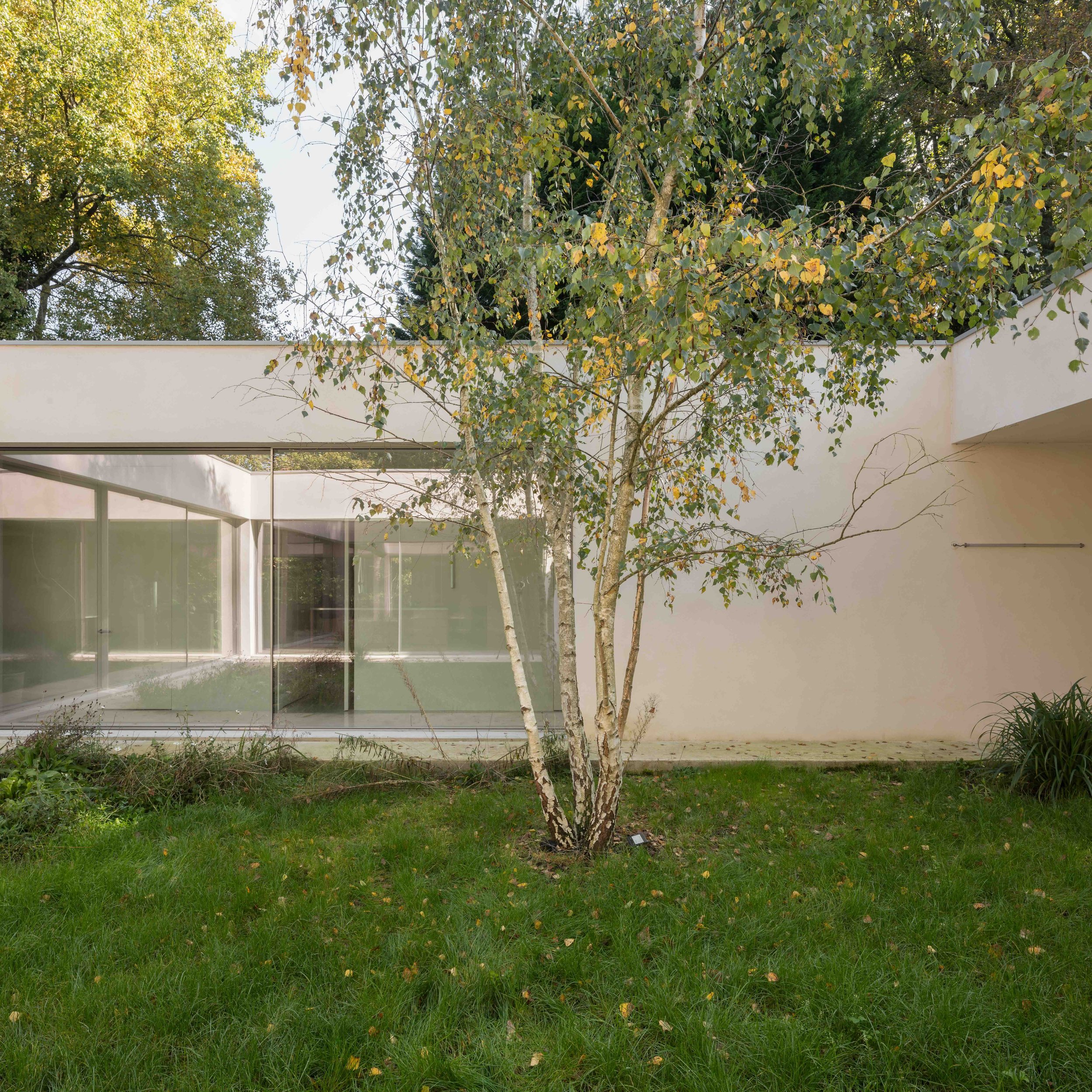
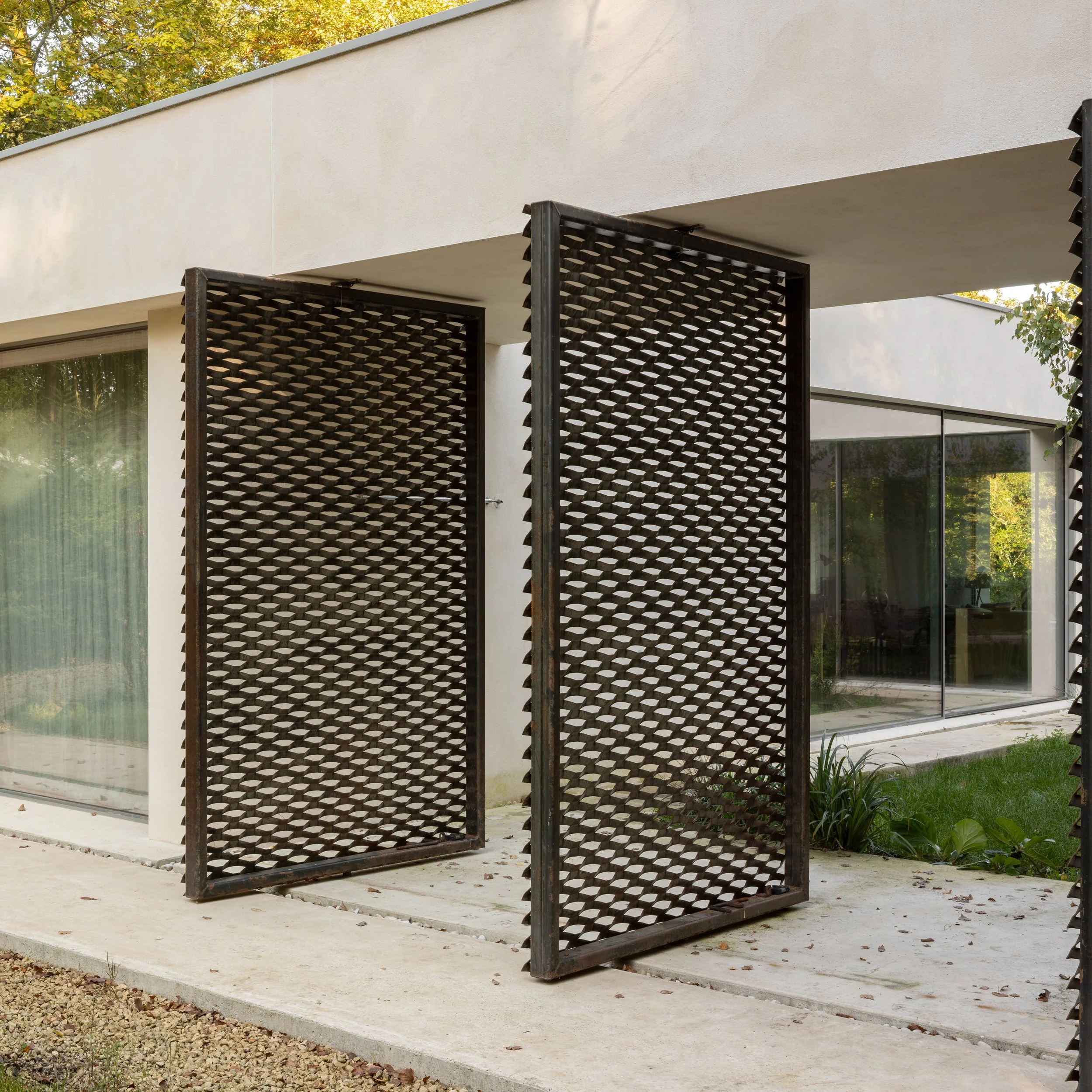
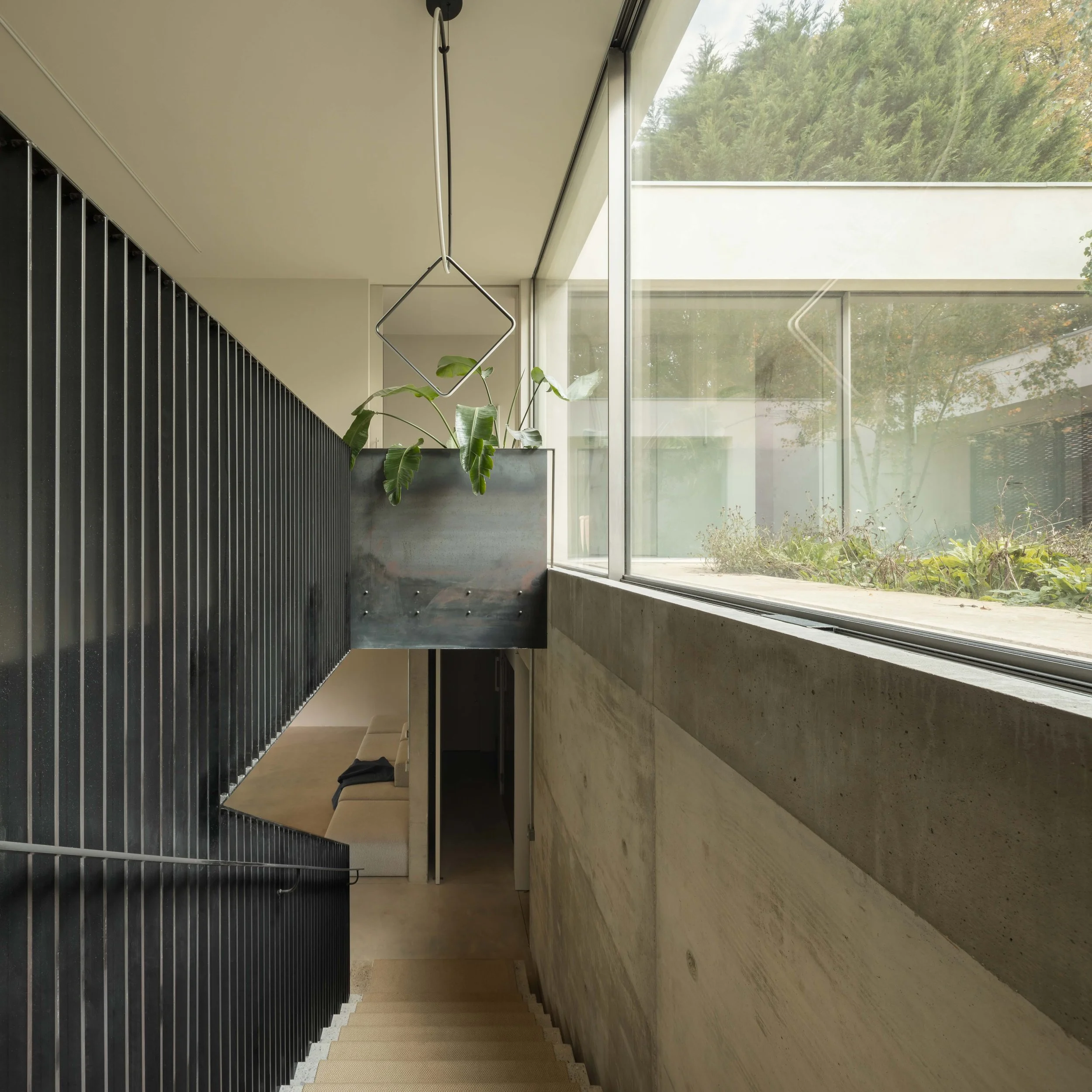
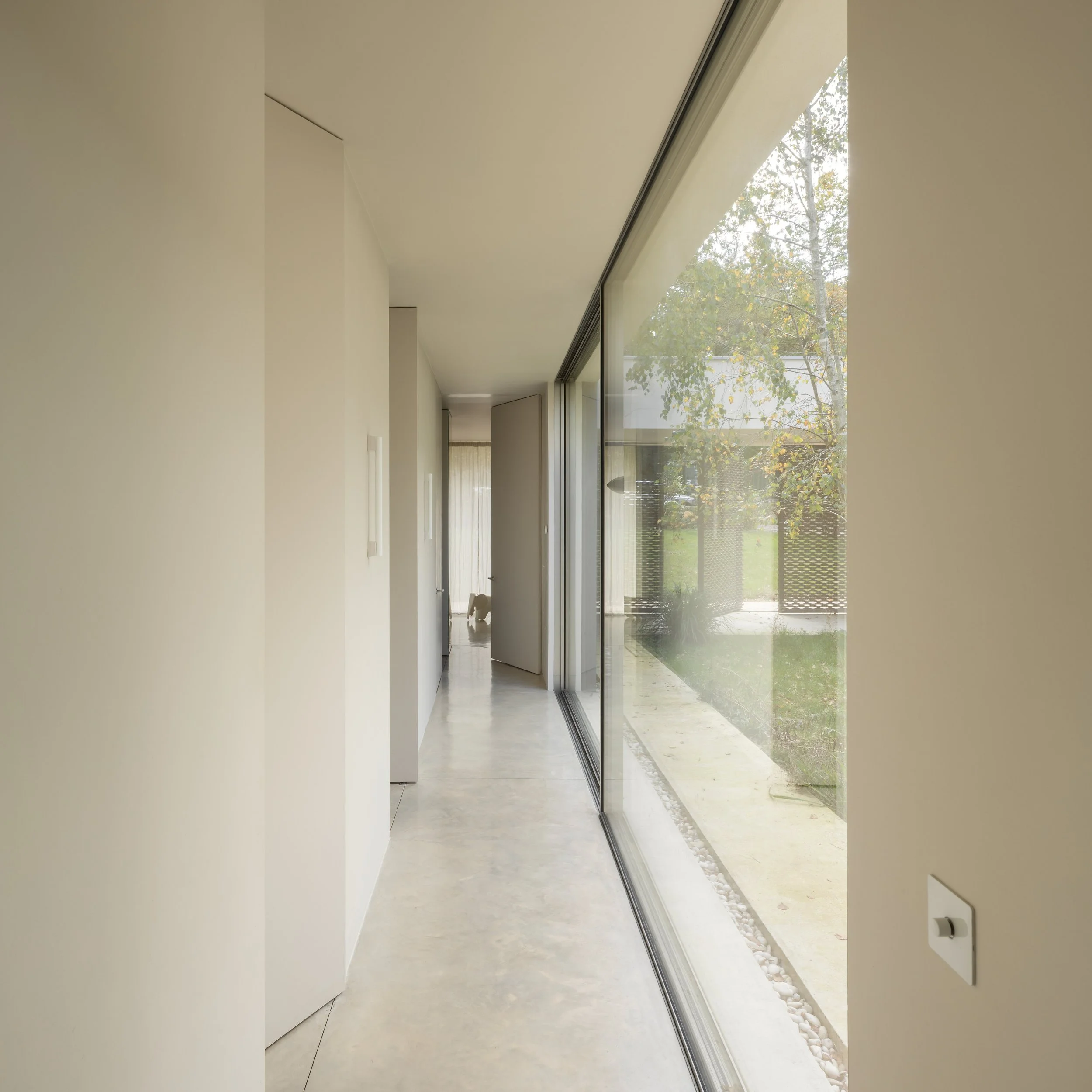
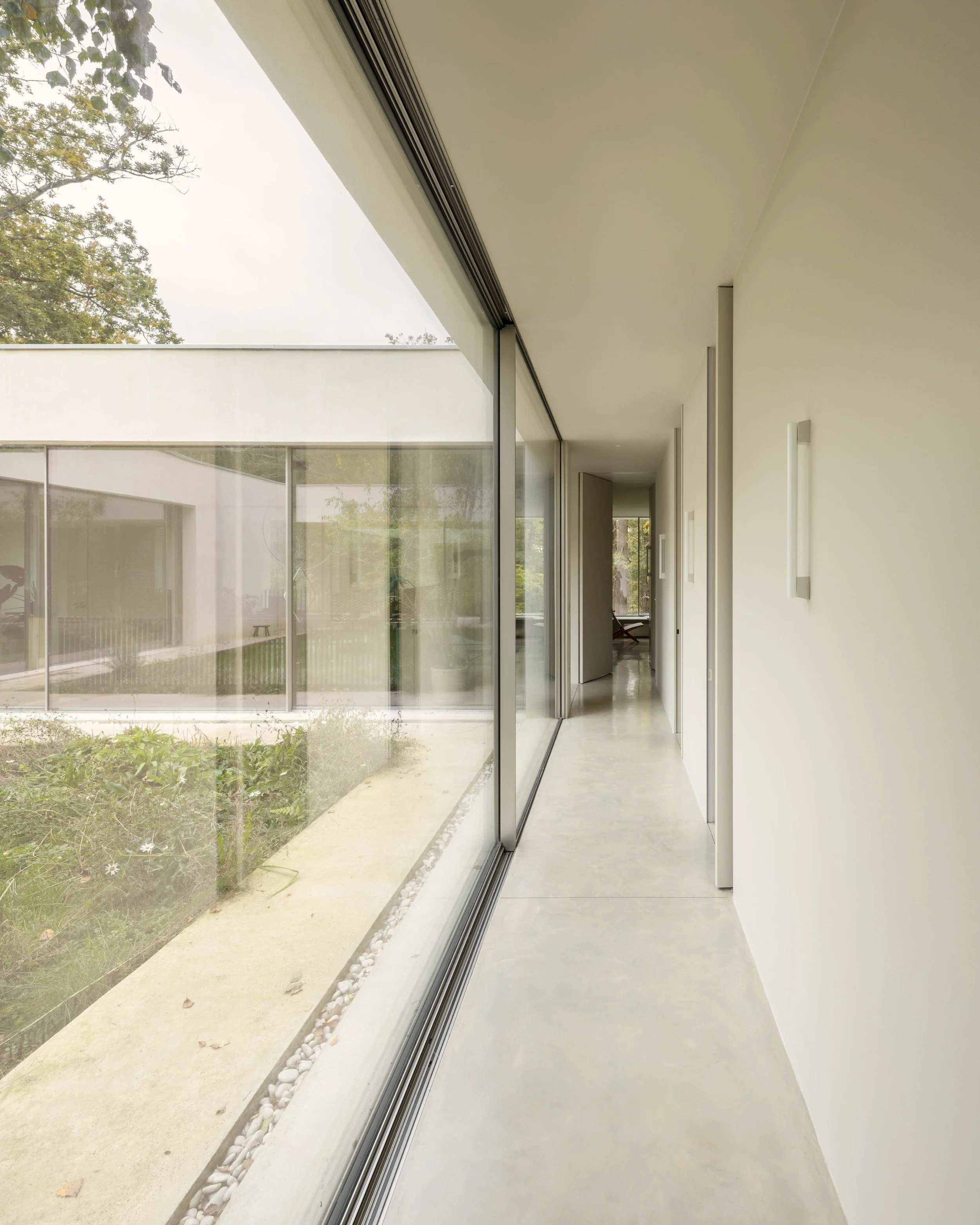
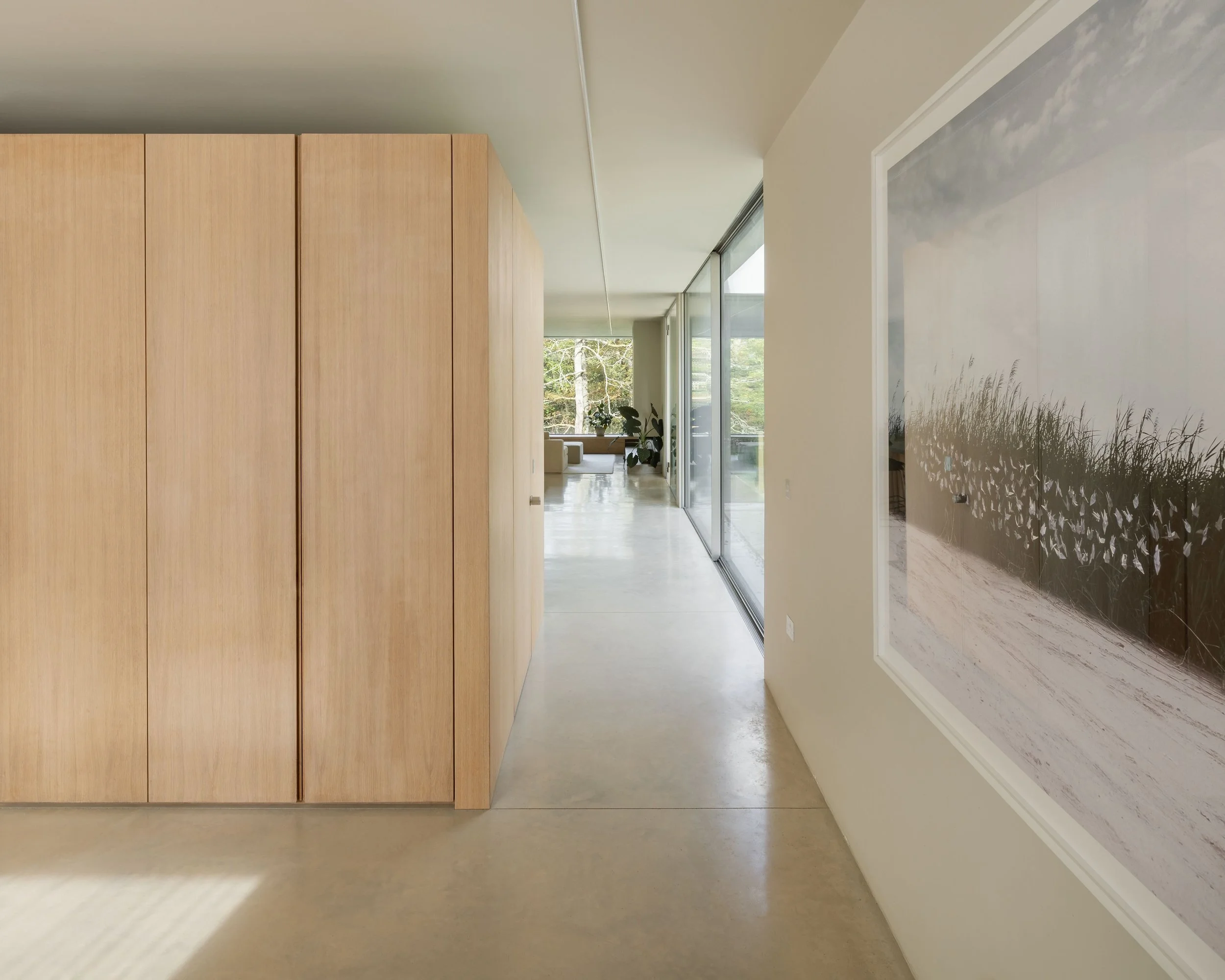
The house is designed to be viewed uninterruptedly along its central South-North axis - through the front gates, past courtyard and glazed interior to a balcony overlooking the forest. From the courtyard, a system of views and reflections creates depth and spatial sequence. This is amplified by three panes of glass positioned perpendicular to one another, creating a multitude of reflections. Full-height glazing, doors and gates remove visual barriers when open, connecting the spaces and extending these into their landscape setting.
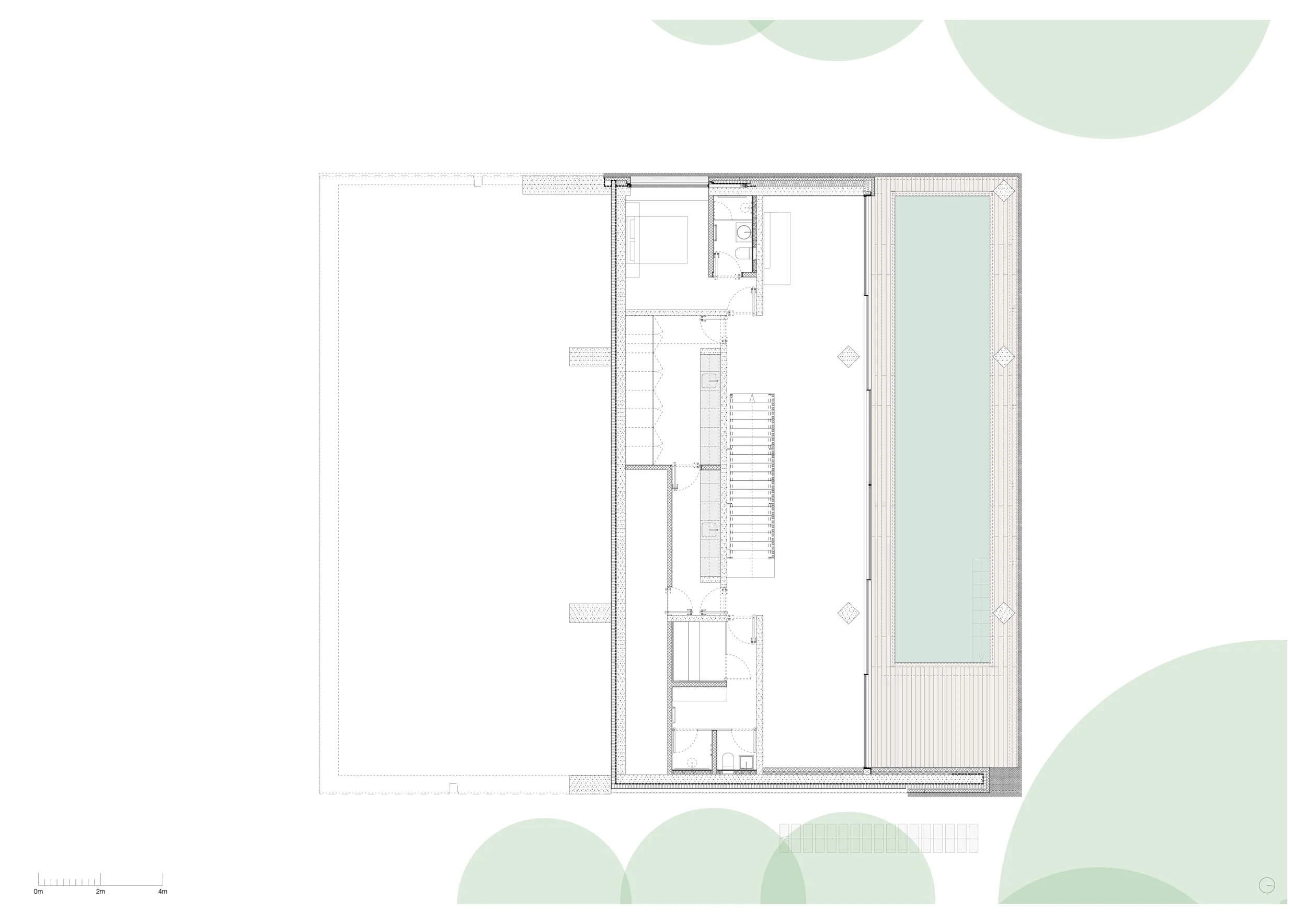
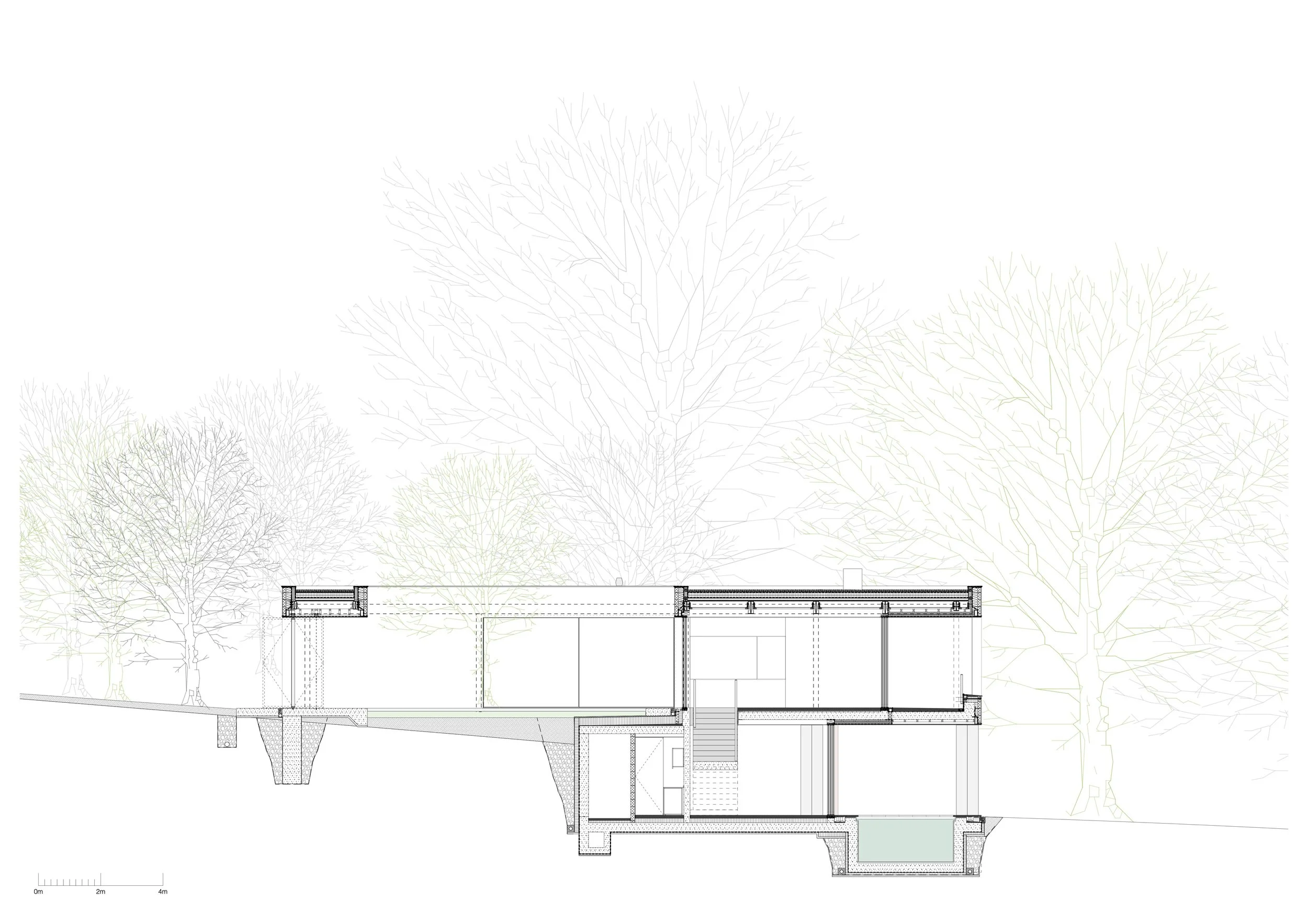
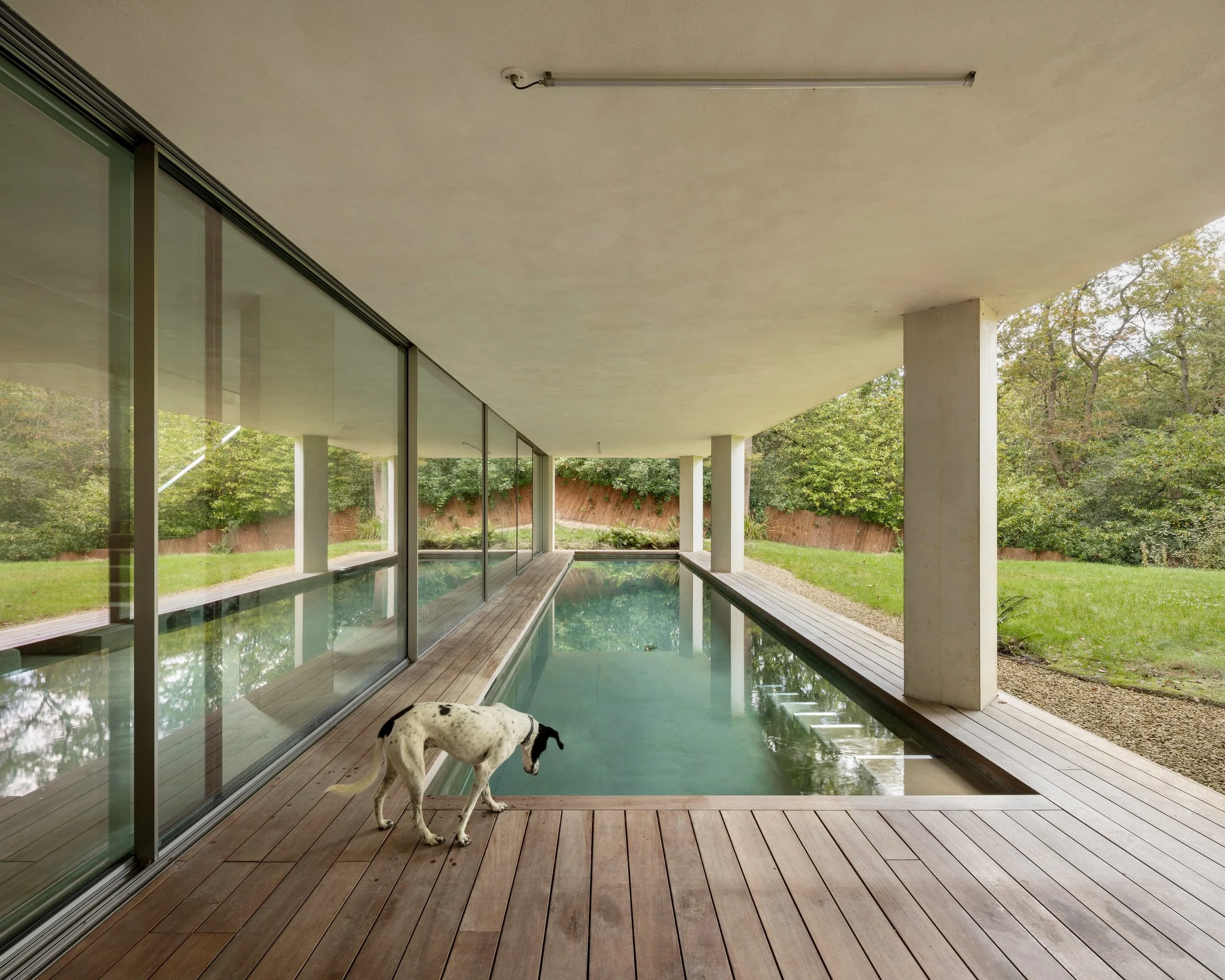
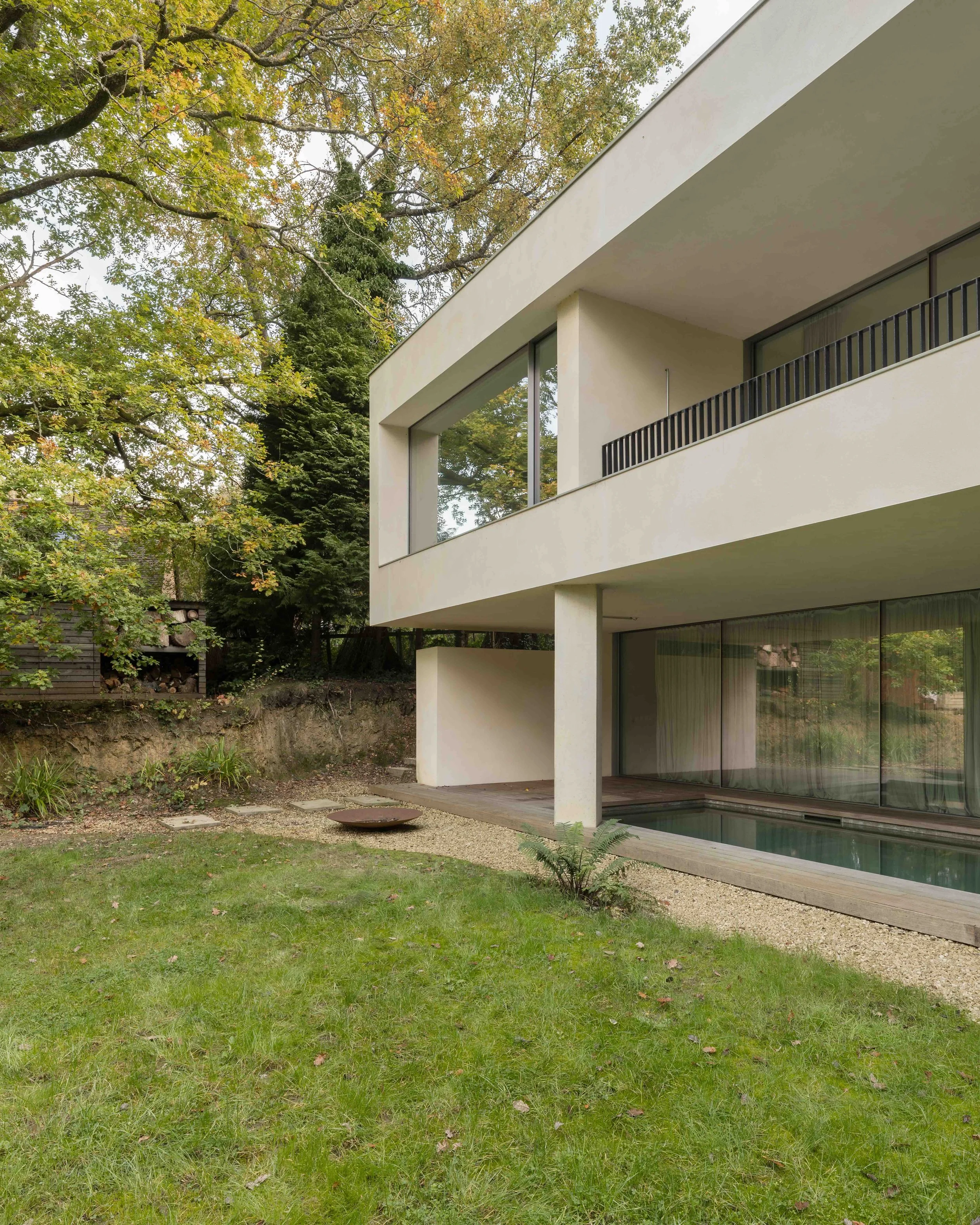
A wide stair connects the ground to the lower level. As one descends, sinking along the courtyard, a pool in the lower level, set amongst rotated concrete columns, is gradually revealed.
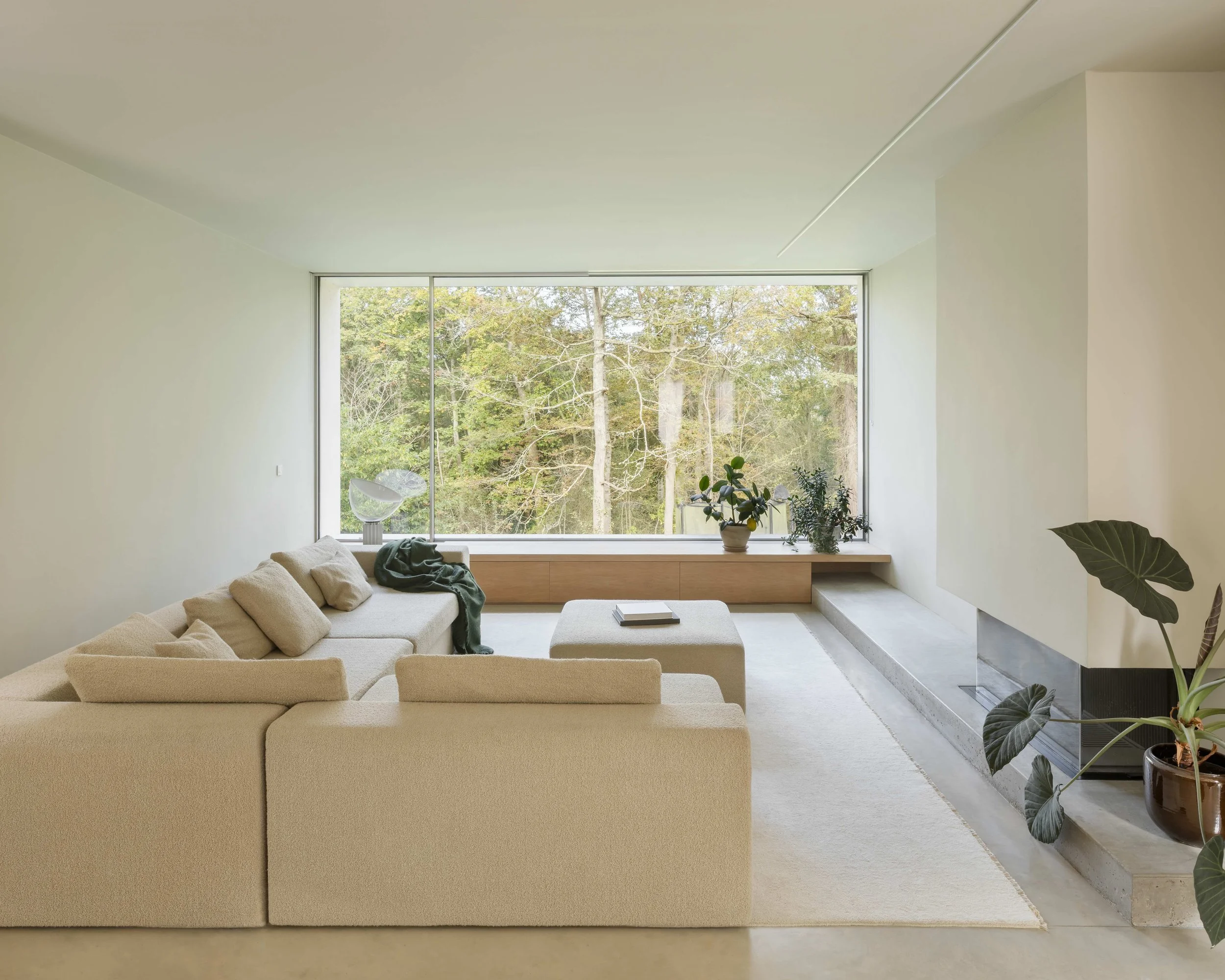
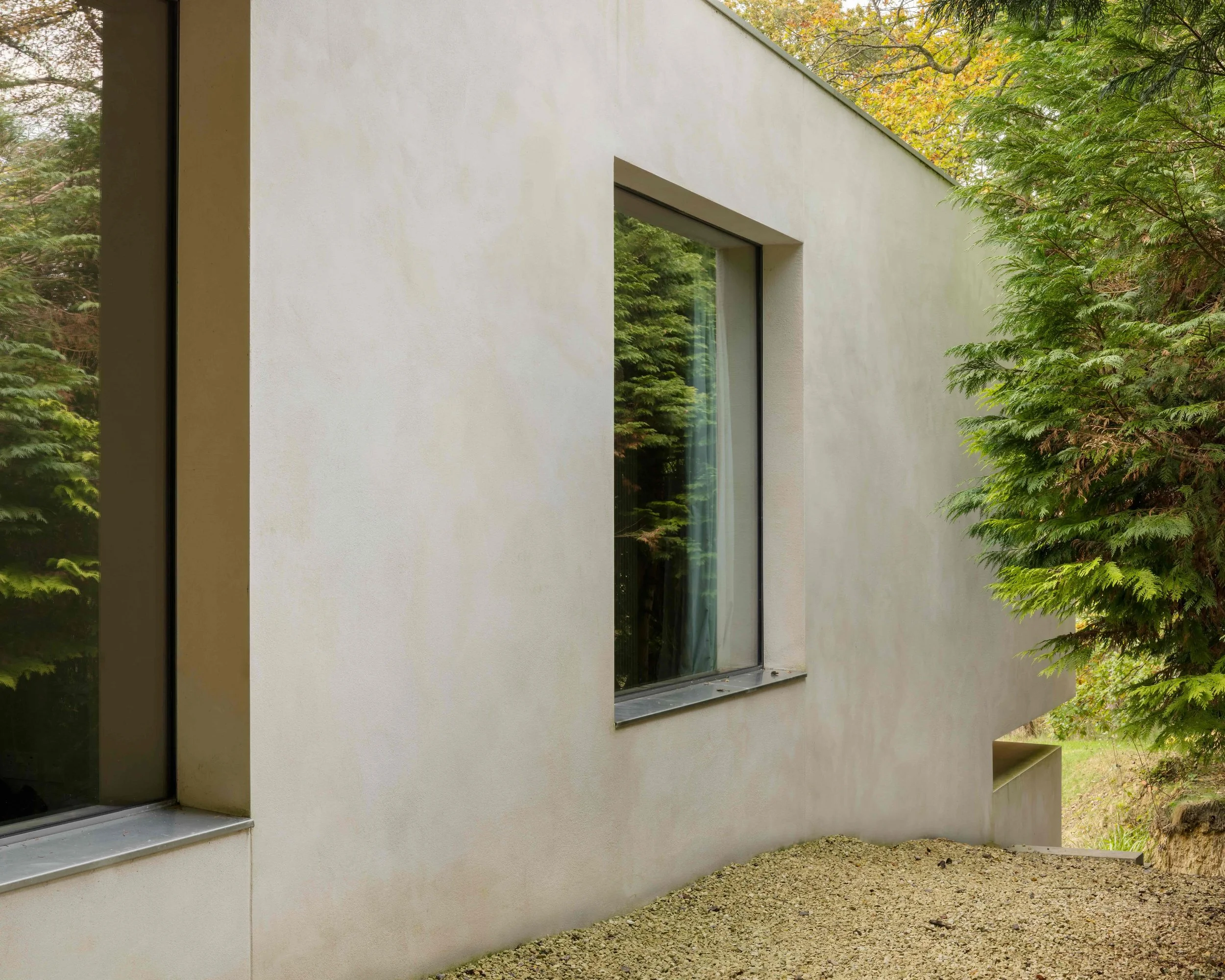
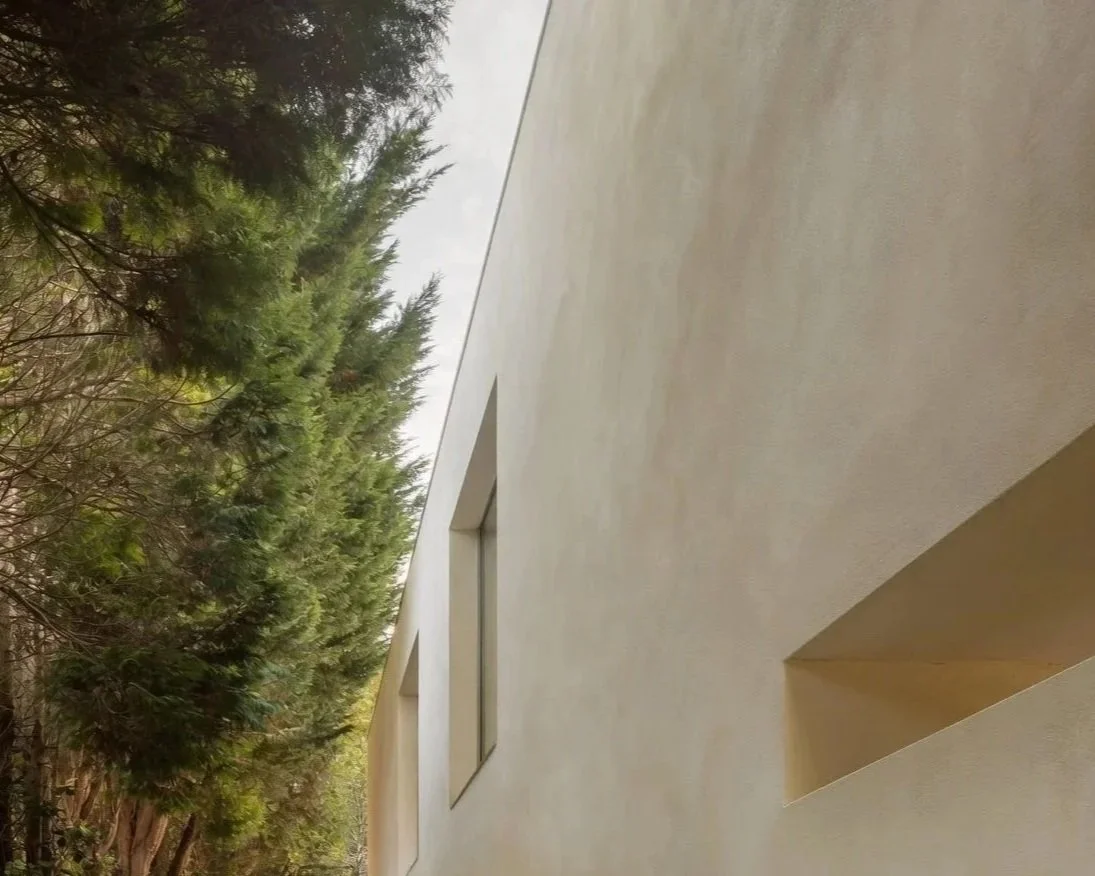
Neighbouring houses are built closely to the site boundaries on the East and West. In response, solid walls to either side of the house act like barriers, slicing through the landscape. Living spaces are on the West to receive afternoon sun, while bedrooms are on the East for morning light.
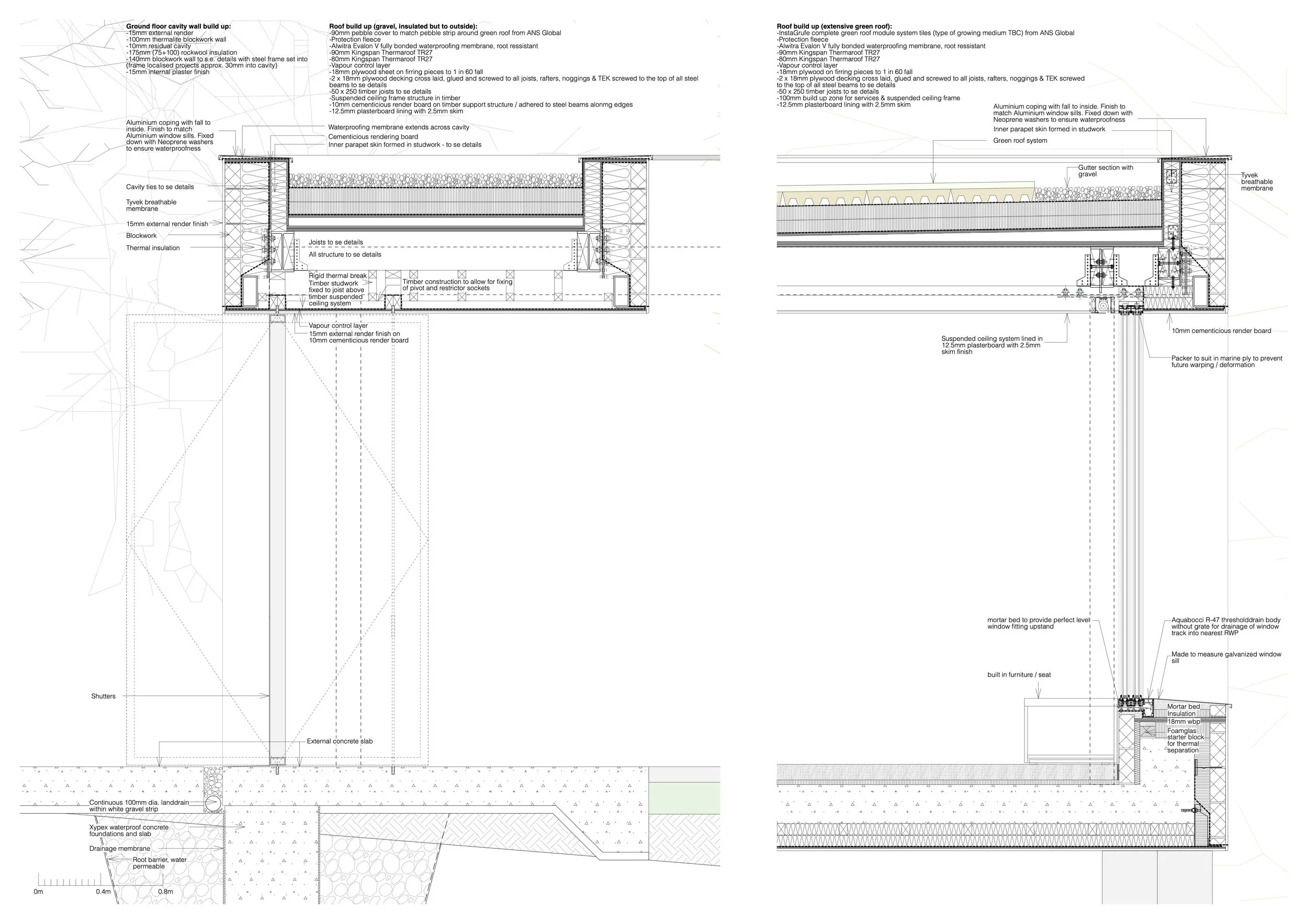
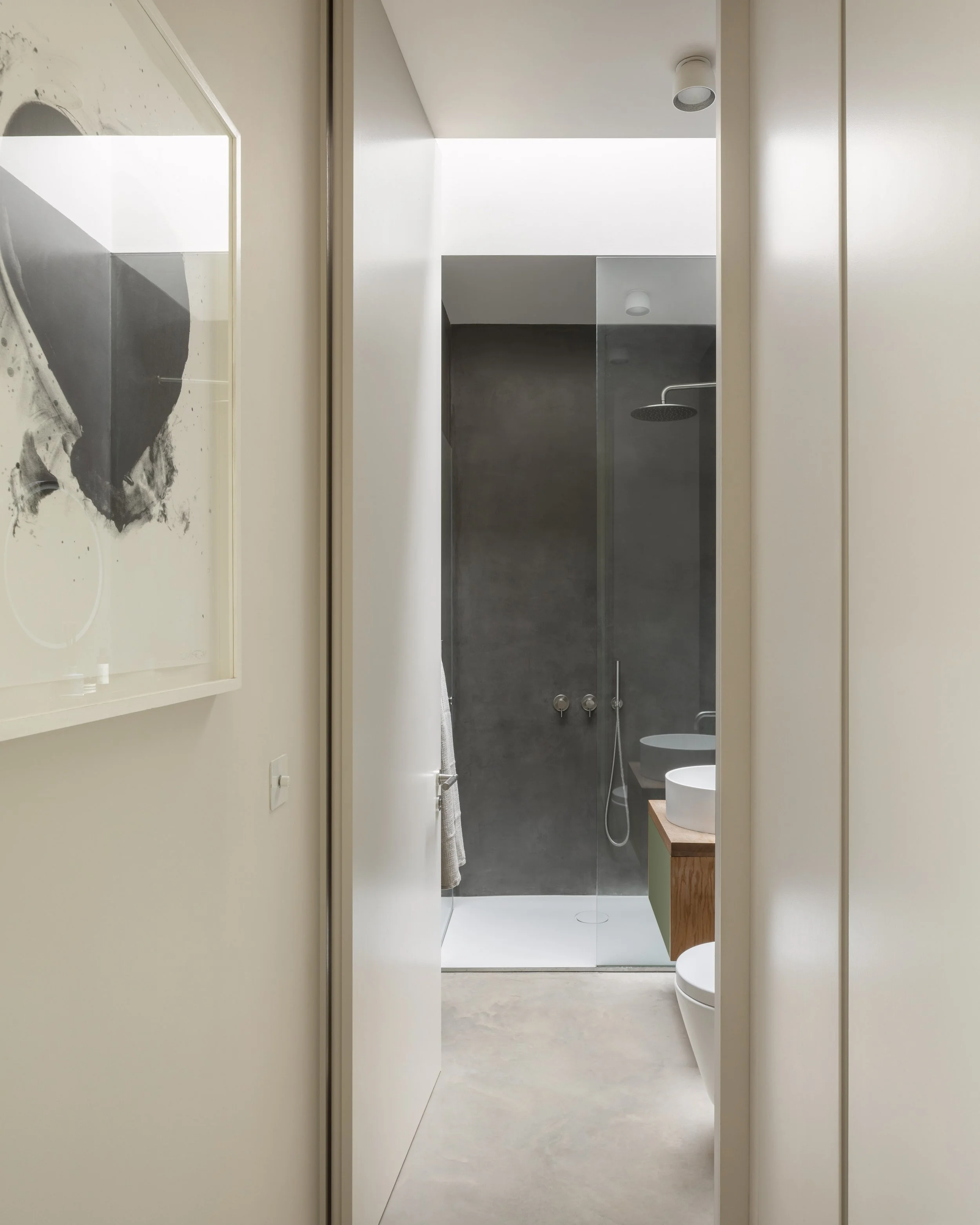
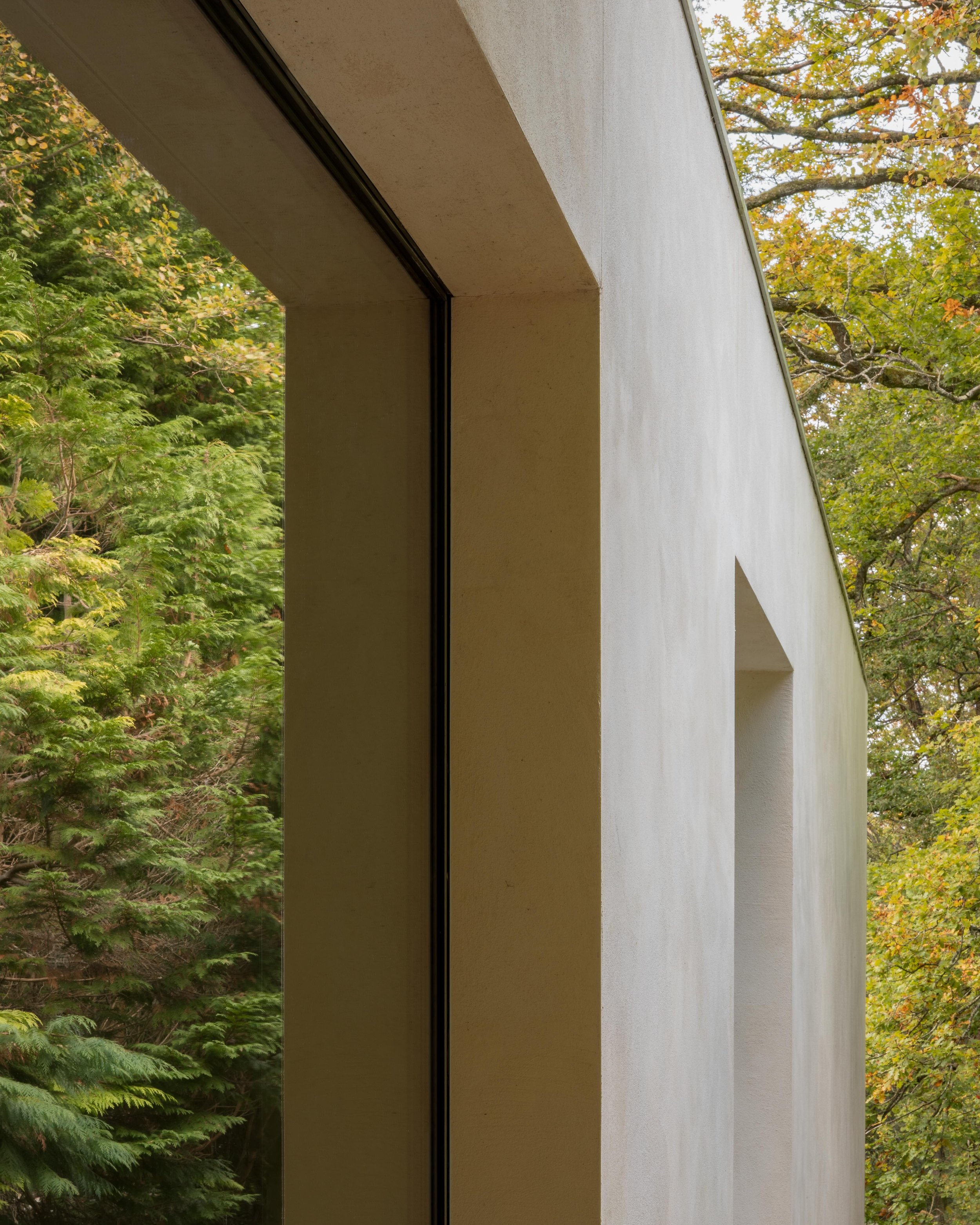
Materially, lime render is applied to masonry construction, sealed not painted, for its natural texture and tone variation, referencing vernacular British countryside houses. The basement is formed in poured concrete, providing robust construction and waterproofing, as well as contrasting texture internally. The roof is fully planted allowing the landscape to further envelop the house and enhancing biodiversity on site.
The house is conceived as still and geometric, partially sunk into the terrain to preserve the natural contours of the site. Framing long views across the trees, it sets a continuous dialogue between interior spaces and the forest, developing through the movement of nature and seasons.
Sustainability
Siting
The house was built in a clearing in the forest, adjacent to ancient woodland, and carefully moulded to the site’s existing terrain, minimising excavation. Existing trees on site were individually assessed, with detailed protection measures implemented during construction, resulting in no trees cut or damaged.
Design and materials
The project prioritises passive design principles. The house is designed to capture South, East, West sunlight in the courtyard, while enabling natural cross ventilation to all living spaces. Other passive design strategies are high thermal mass (masonry and concrete external walls) and deep recessed openings to provide shade to glazing.
Materials were selected for durability, longevity and low environmental impact. Building fabric elements achieve U-values exceeding Building Regulations requirements.
The site uses an integrated sustainable drainage system—including a green roof, permeable surfaces, French drains, a soakaway, and a septic tank—to manage rainfall and wastewater sustainably while minimising flood risk.
Heating and hot water are supplied via a ground-source-heat-pump supported by underfloor heating distribution, supplemented by Passivent mechanical ventilation (providing controlled ventilation with heat recovery).
Ecology
Biodiversity achieves net gain through strict tree protection, native planting, and a green roof seeded with native wildflowers, to enhance local ecology and biodiversity, while further connecting the house to the surrounding forest.