Mini Hotel
Mini hotel in Lisbon
Key Materials / Hand-crafted clay floor and wall tiles and concrete
Architecture / Angela Marquito Architecture
Contractor / HES Lamelas
Client / António Branco
Photography / Nuno Pereira
Located on the ninth floor of a building block completed in the early 2000s, within walking distance of the Calouste Gulbenkian Foundation, the mini hotel has uninterrupted views over the city. The brief was to convert a very large apartment into a mini hotel, with the possibility of reconverting it back into an apartment in the future, with the minimum possible material waste. The project explores ideas of disassembly and sustainability within a low budget.
The project departs from three key concepts:
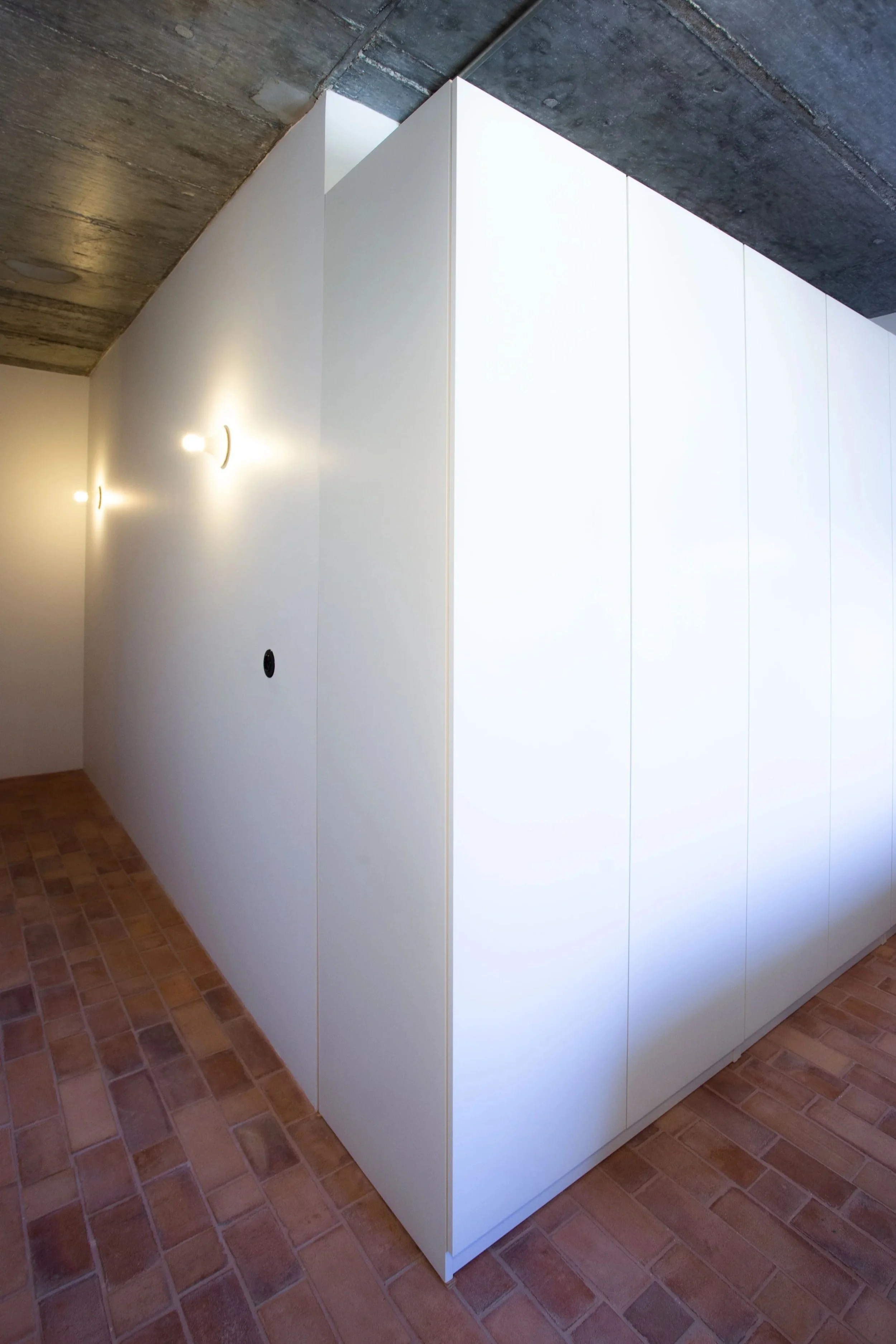
Brief flexibility: the mini hotel can easily be converted back into an apartment with minimum material wastage, requiring only the removal of a single partition wall and the addition of a new short partition wall section, which would re-use the same materials.
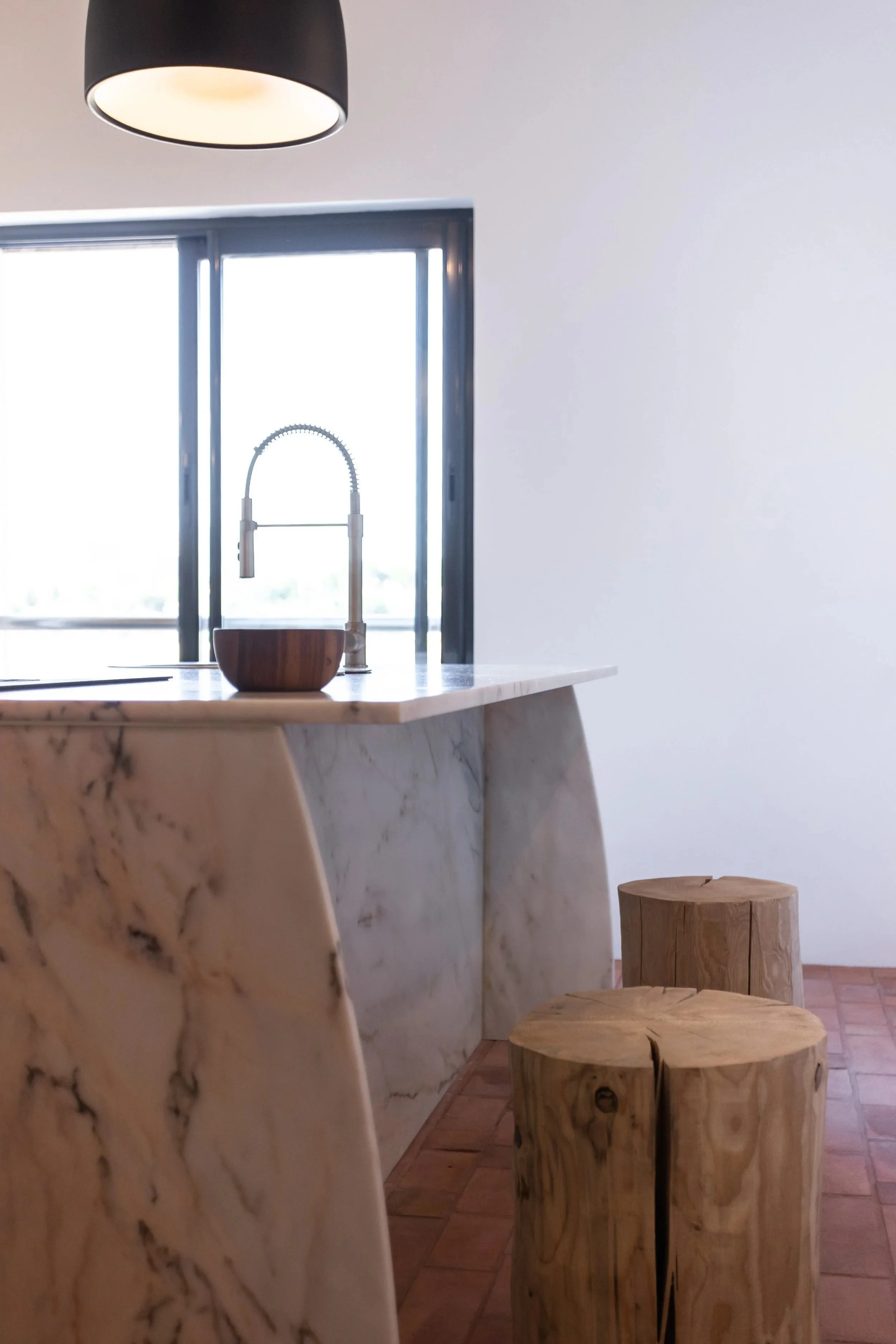
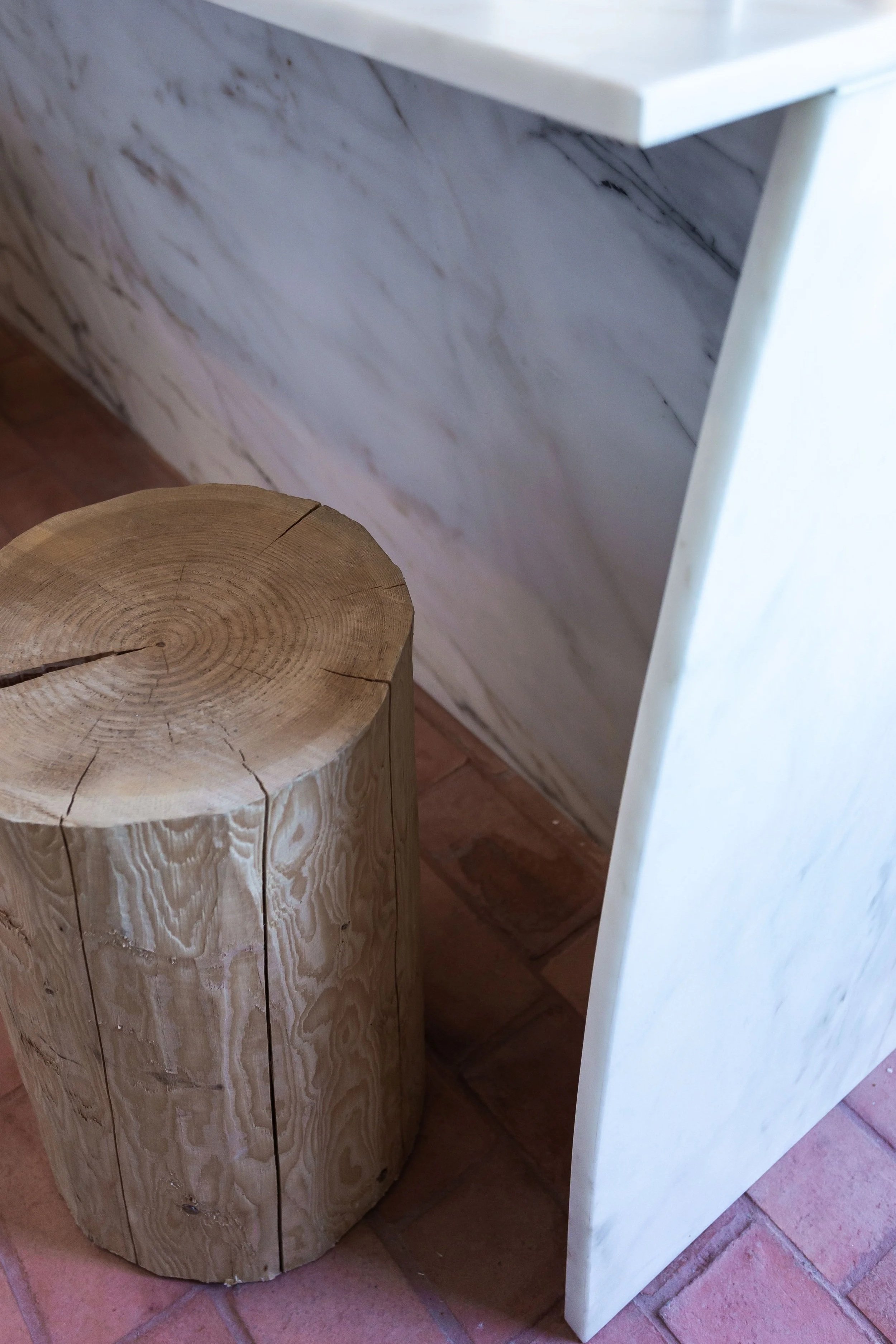
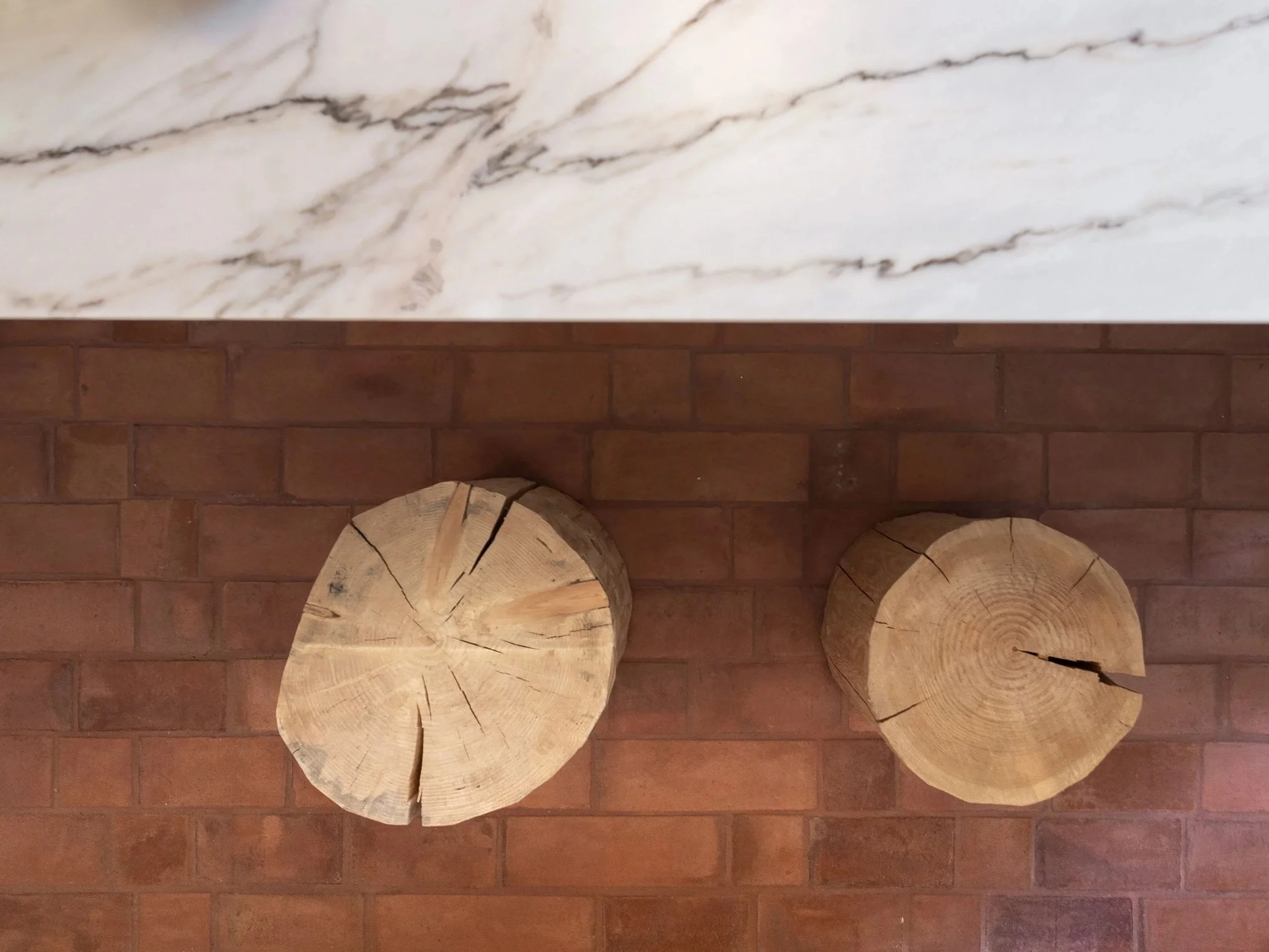
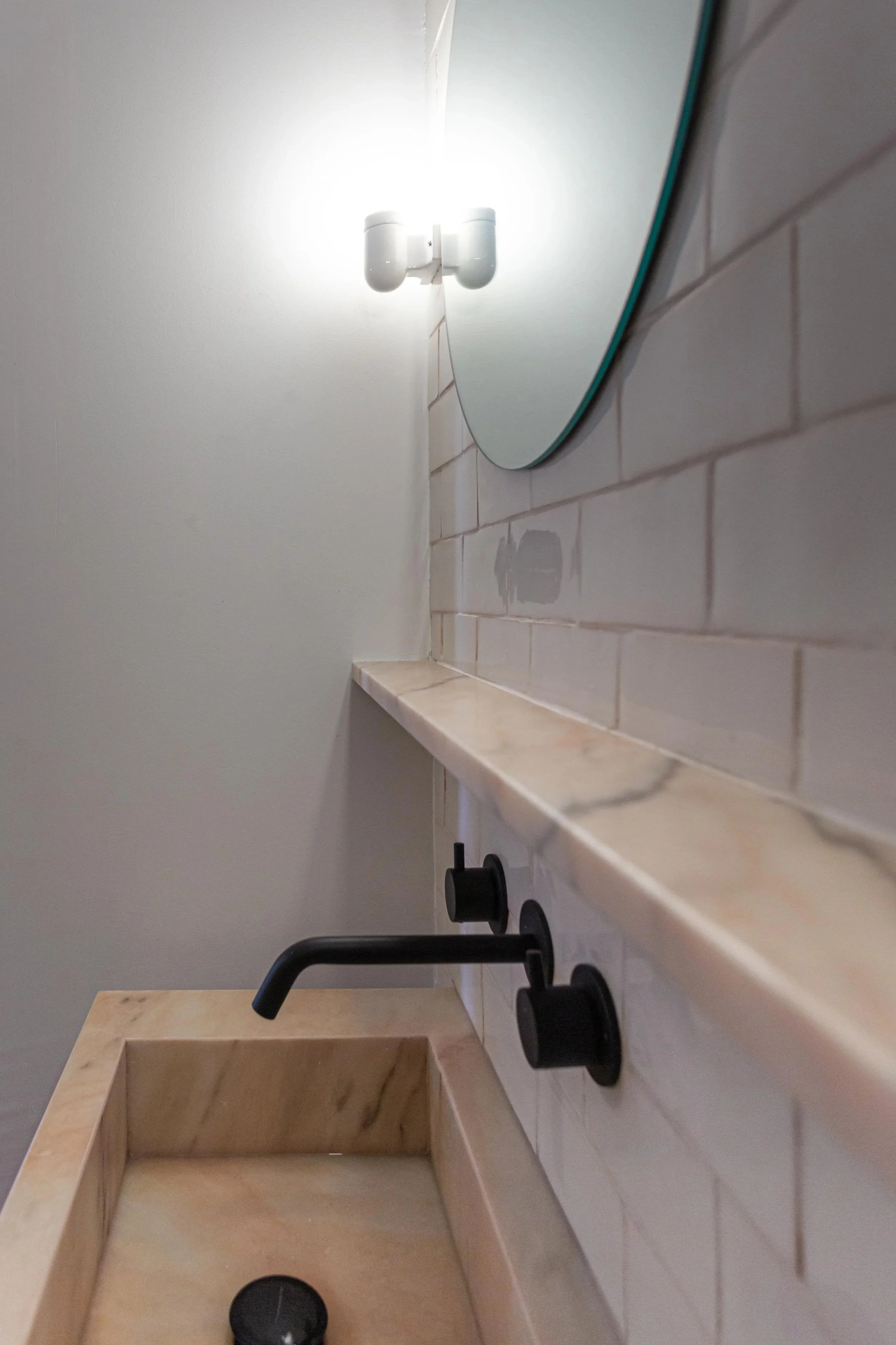
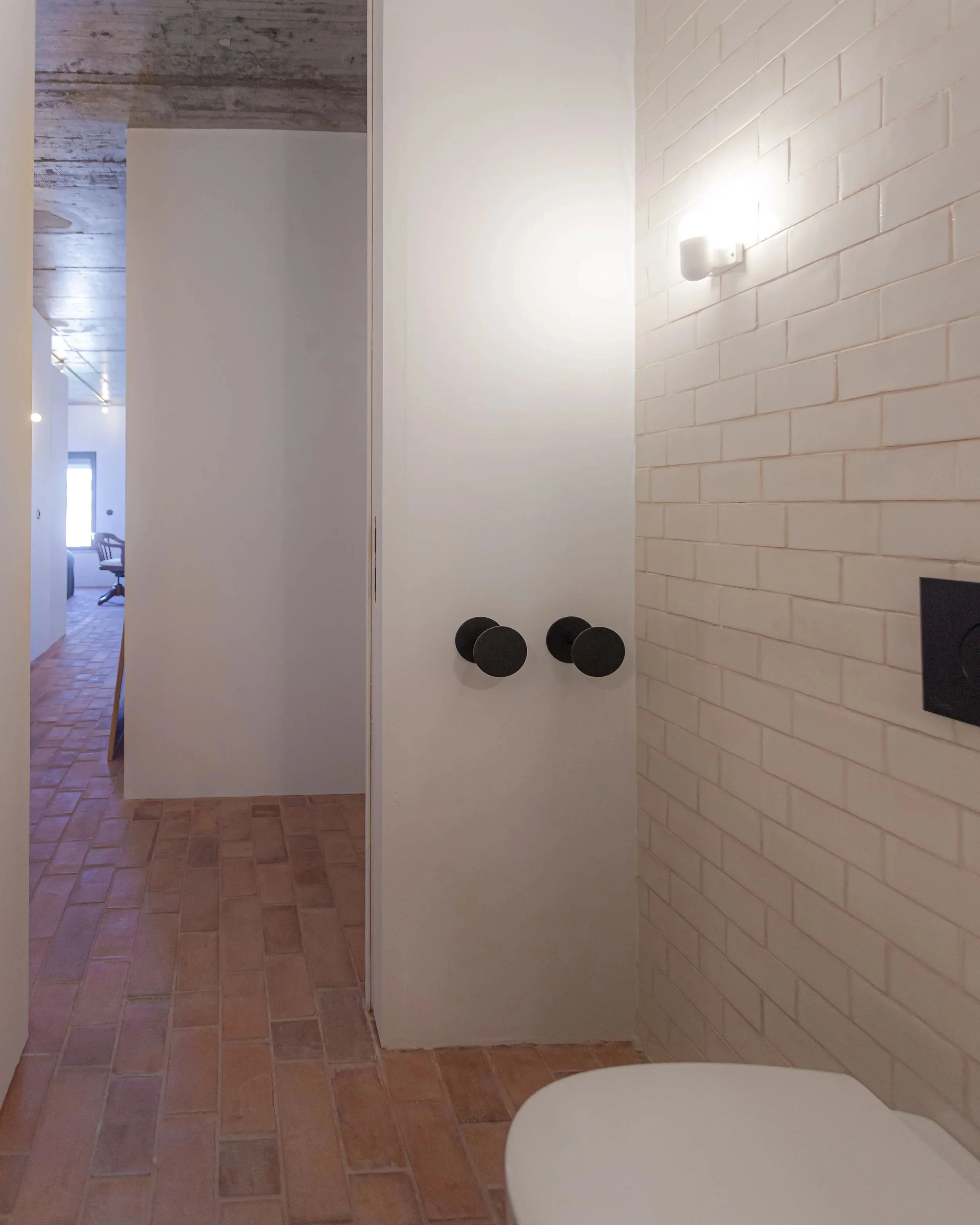
Local handcrafted materials and craftsmanship: materials were locally sourced and handcrafted - clay tiles for the floors and bathroom walls, and locally sourced and crafted stone counter and bathroom sinks. These reflect Portuguese craft and resources, while being sustainably sourced low carbon materials.
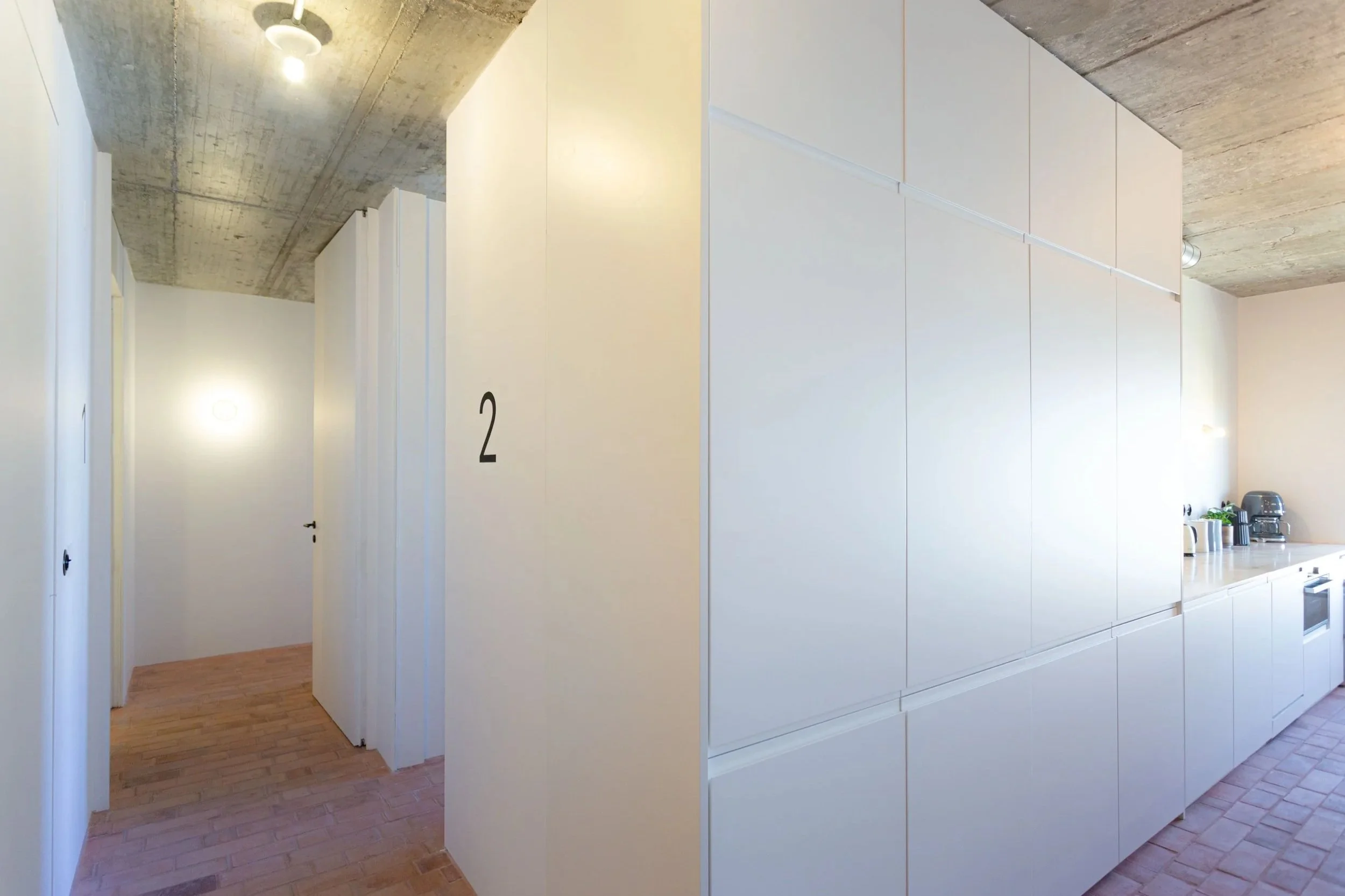
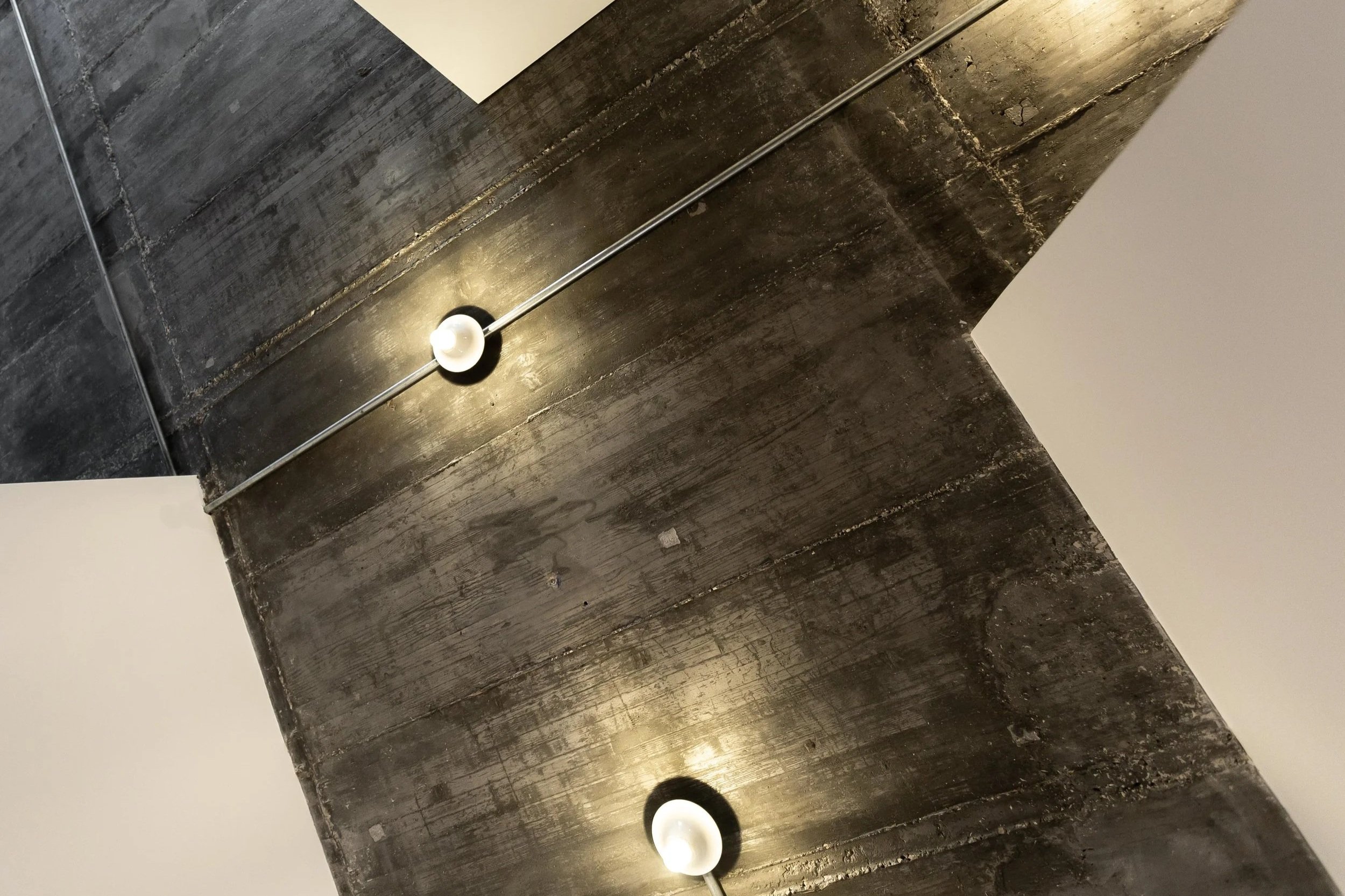
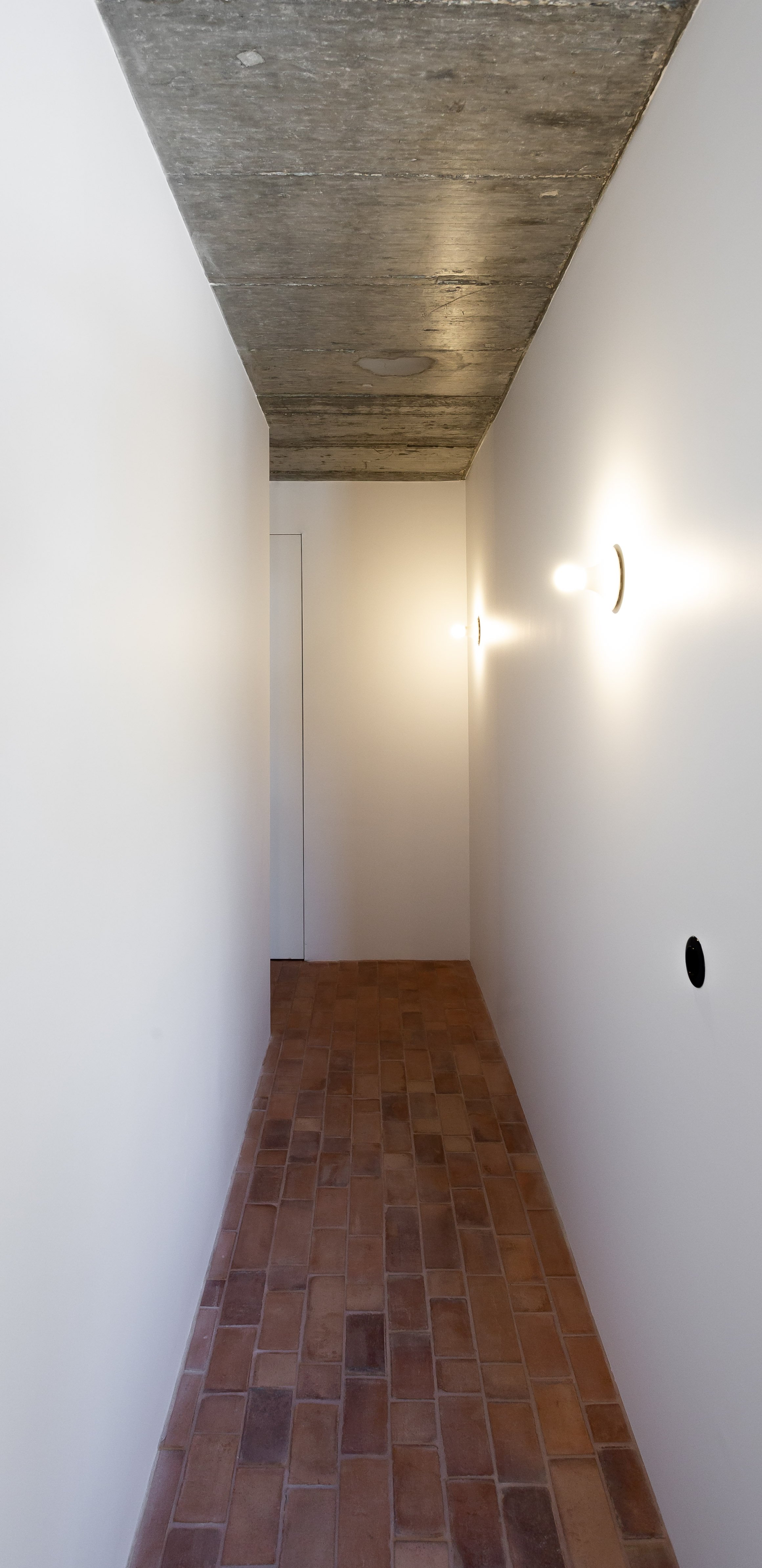
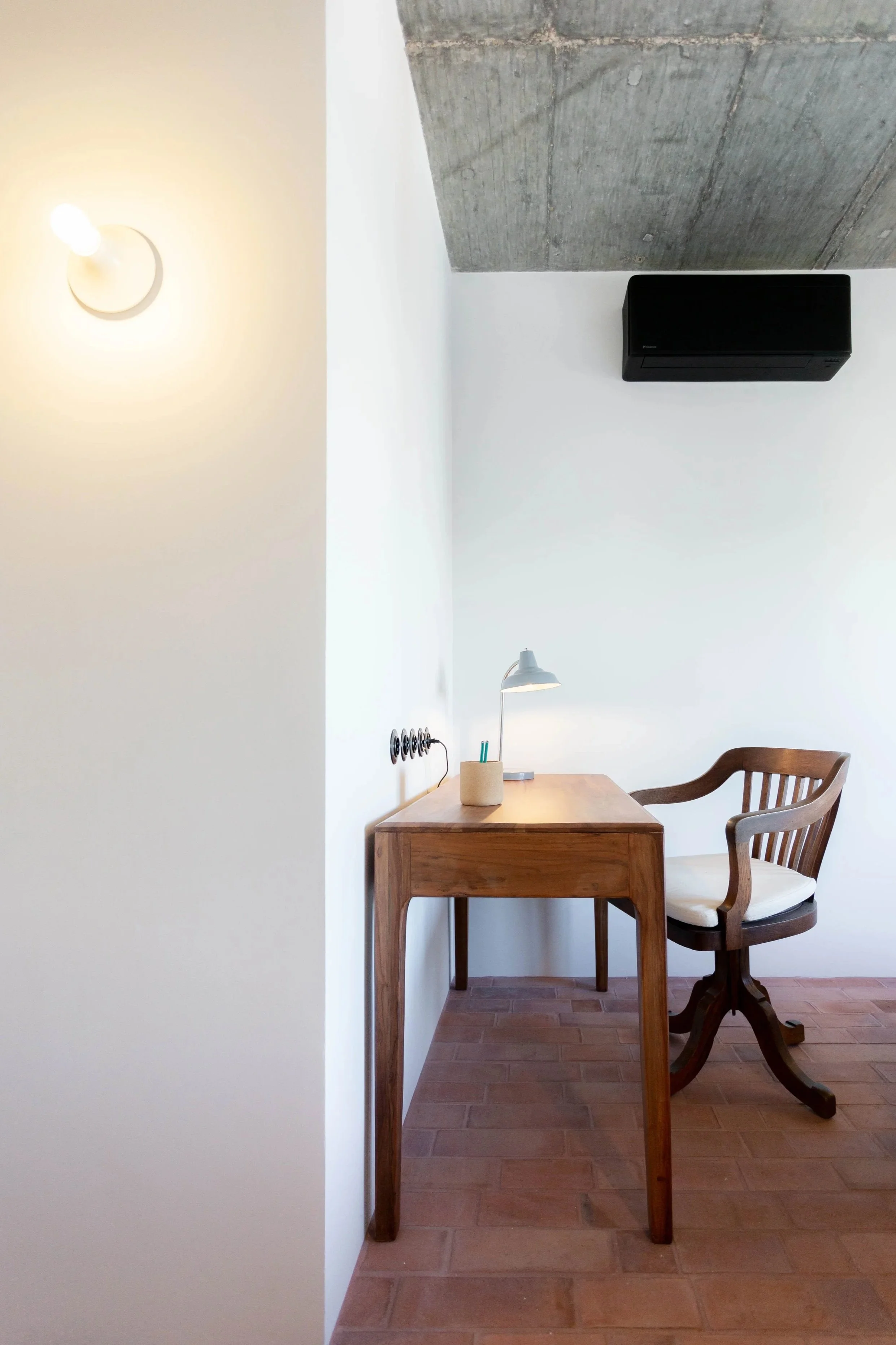
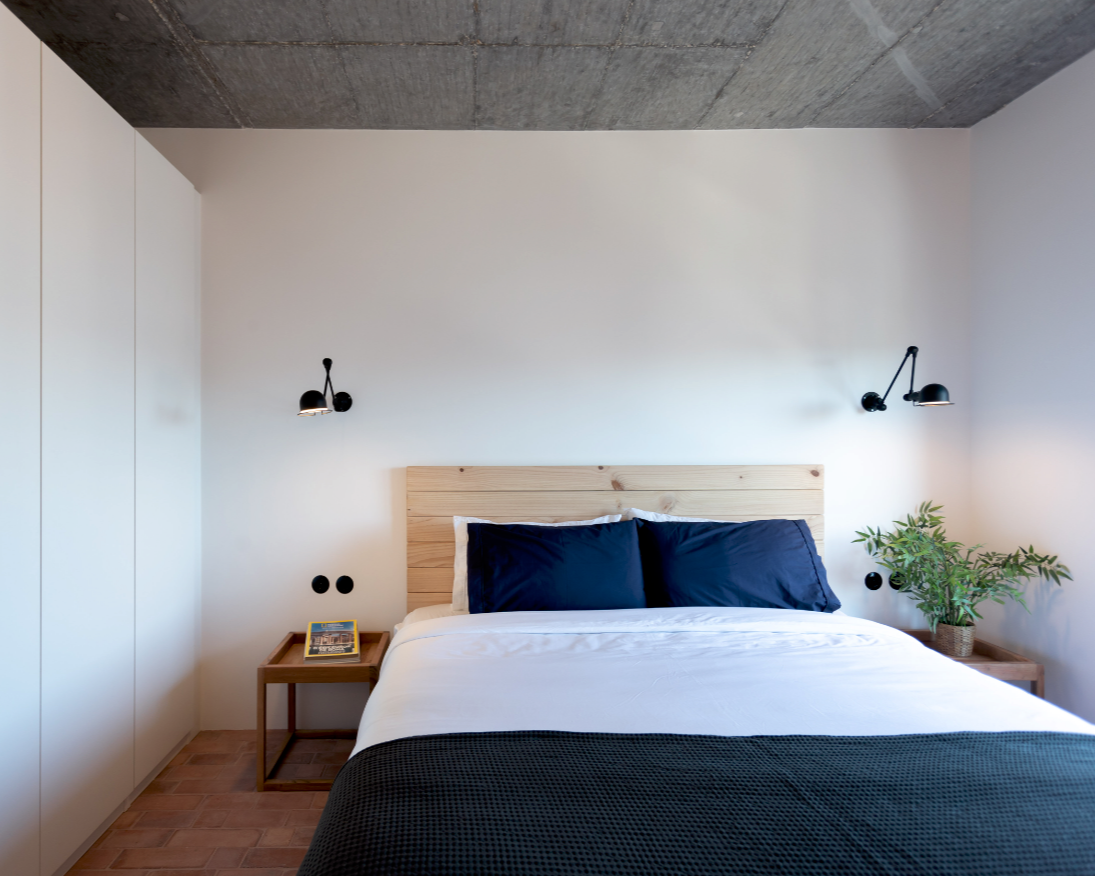
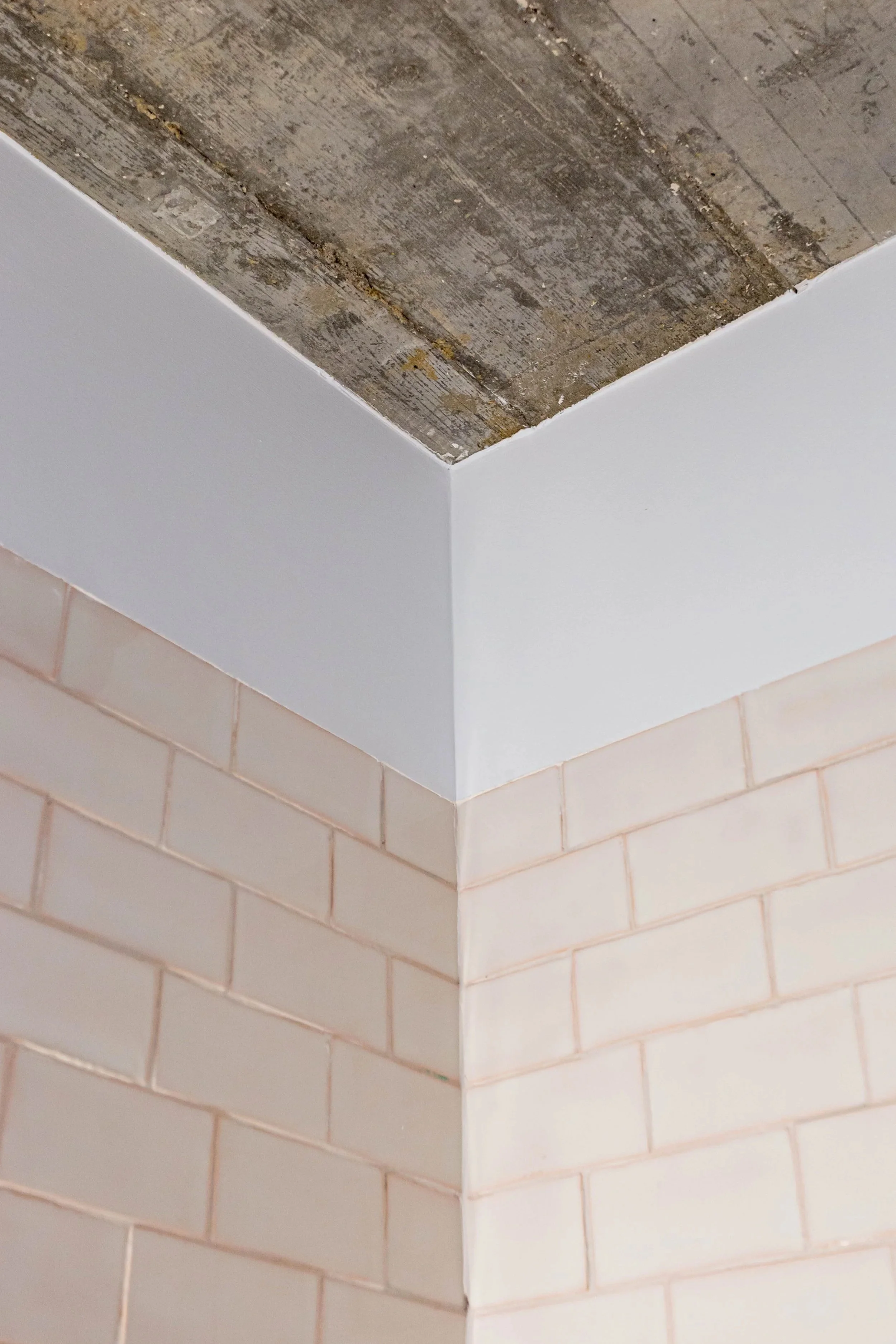
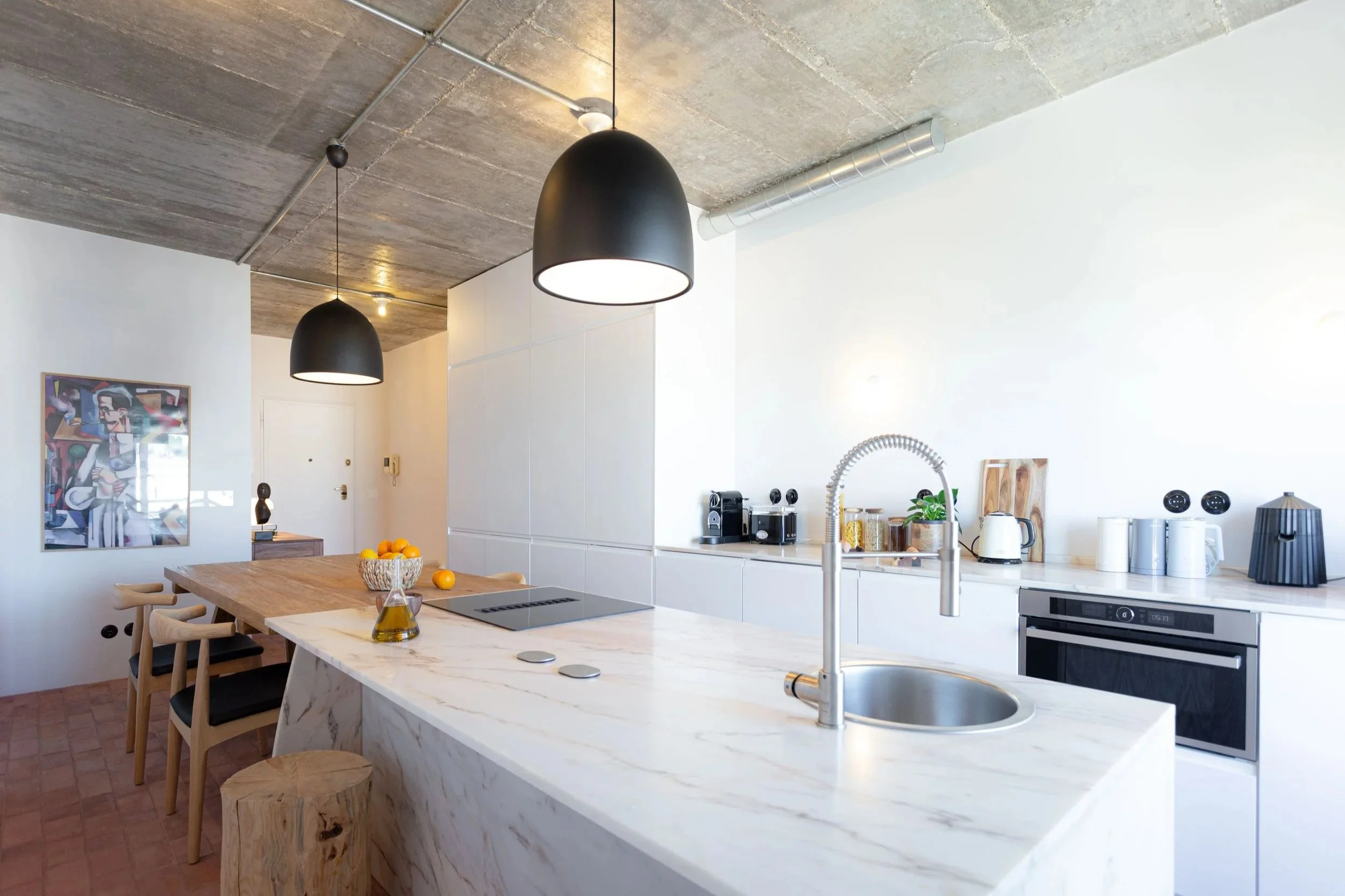
Revealing the original apartment shell: the project exposes the original proportions and materials of the apartment by stripping out the suspended ceilings, revealing the raw concrete shell and adding extra height to the spaces.
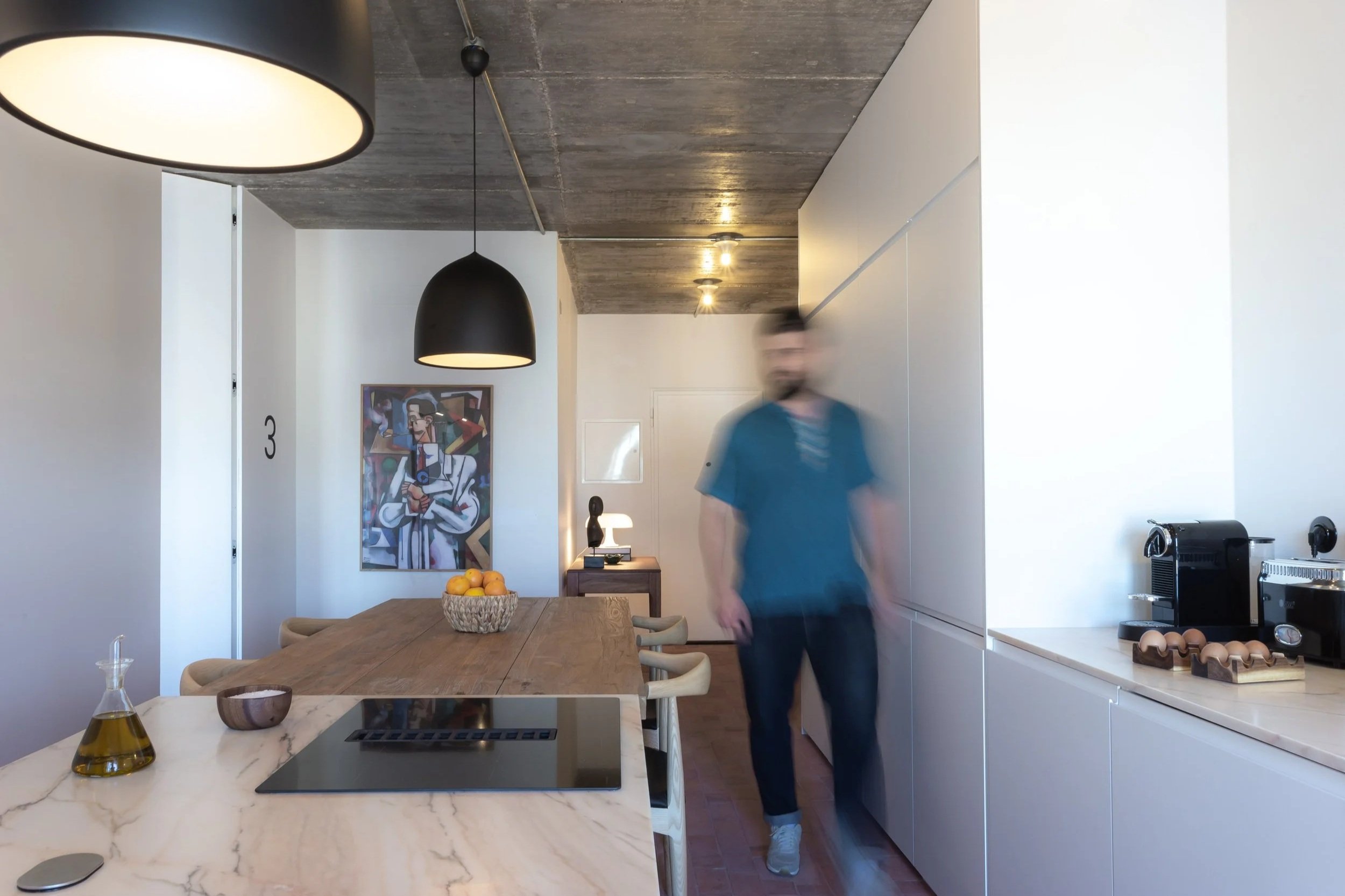
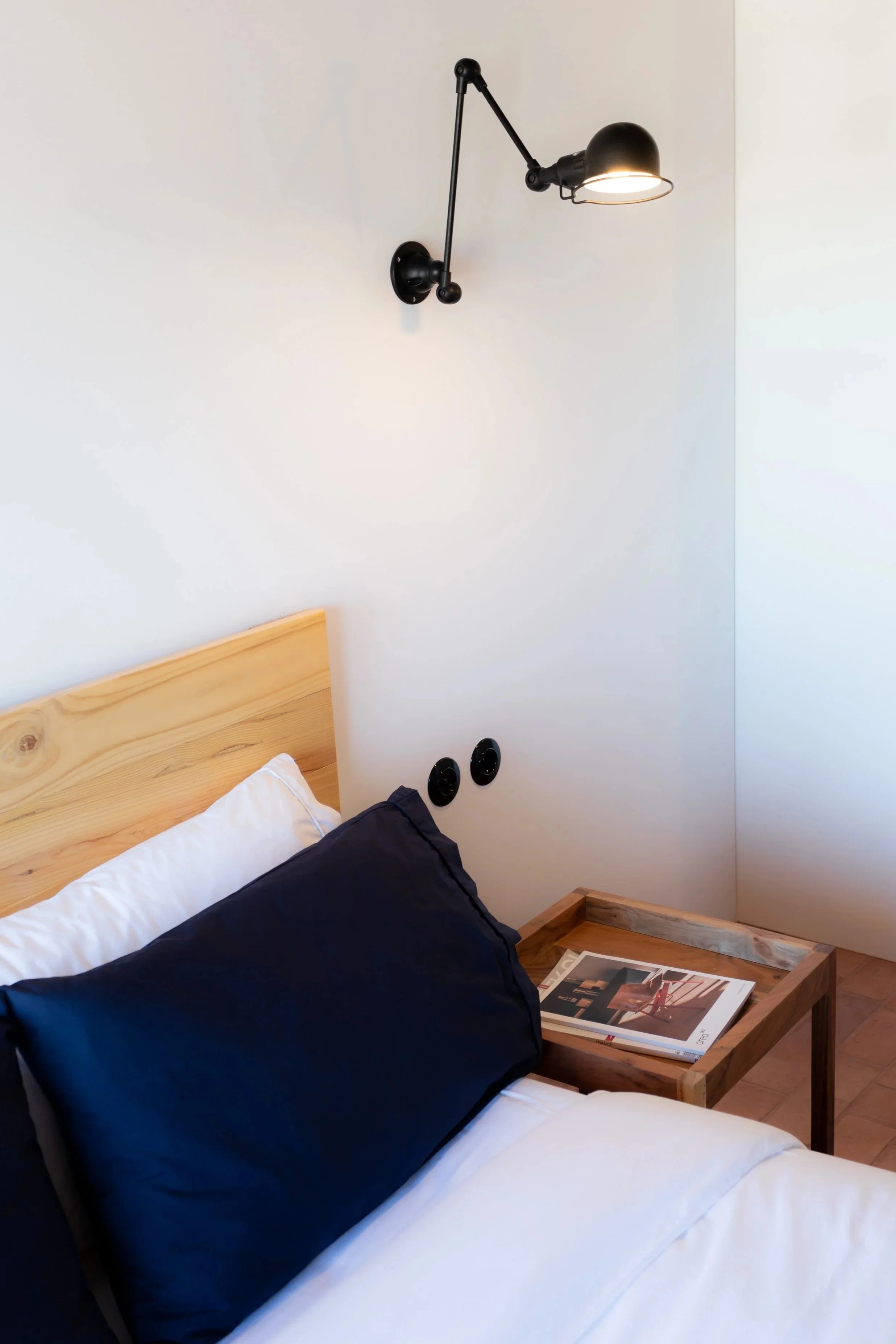
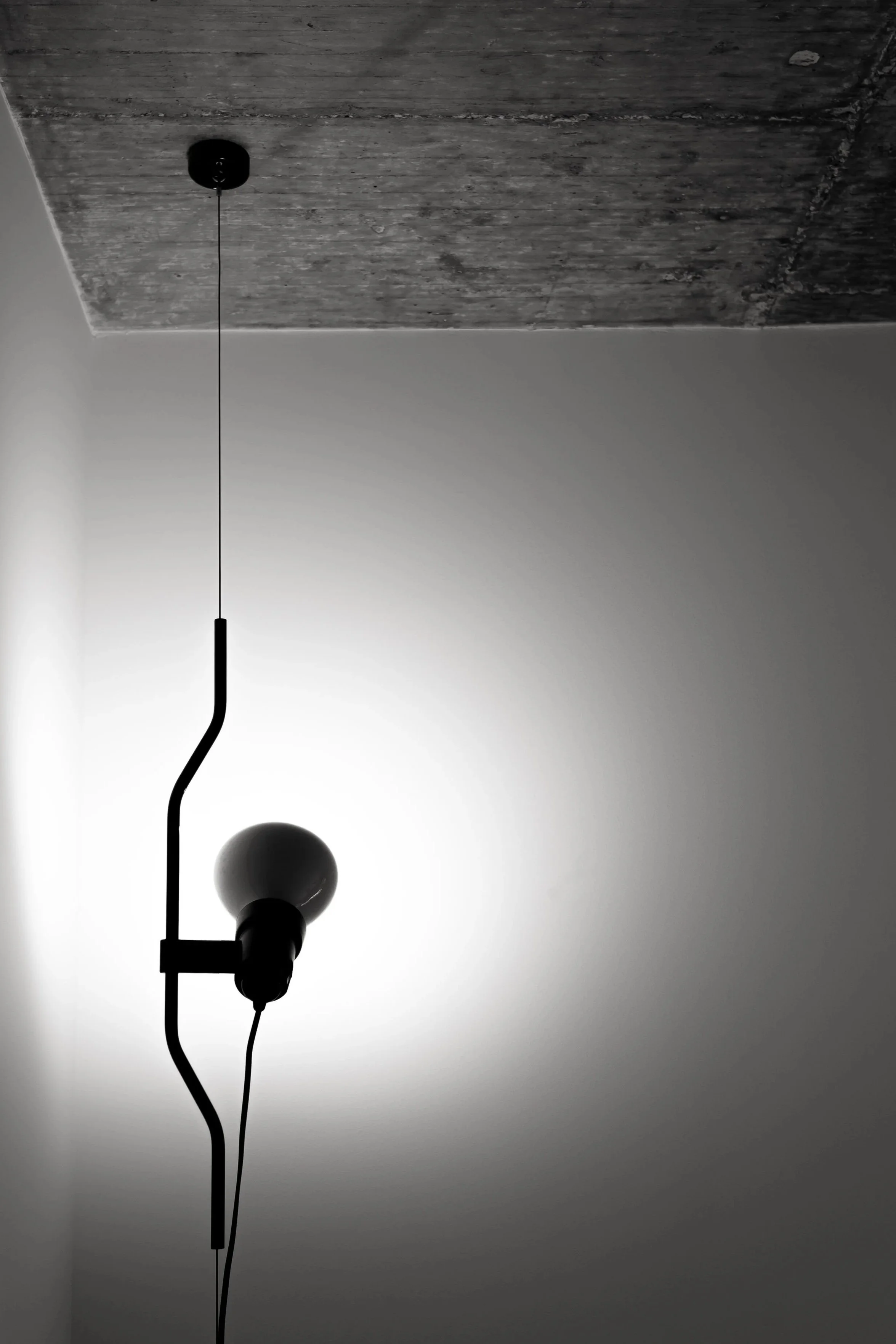
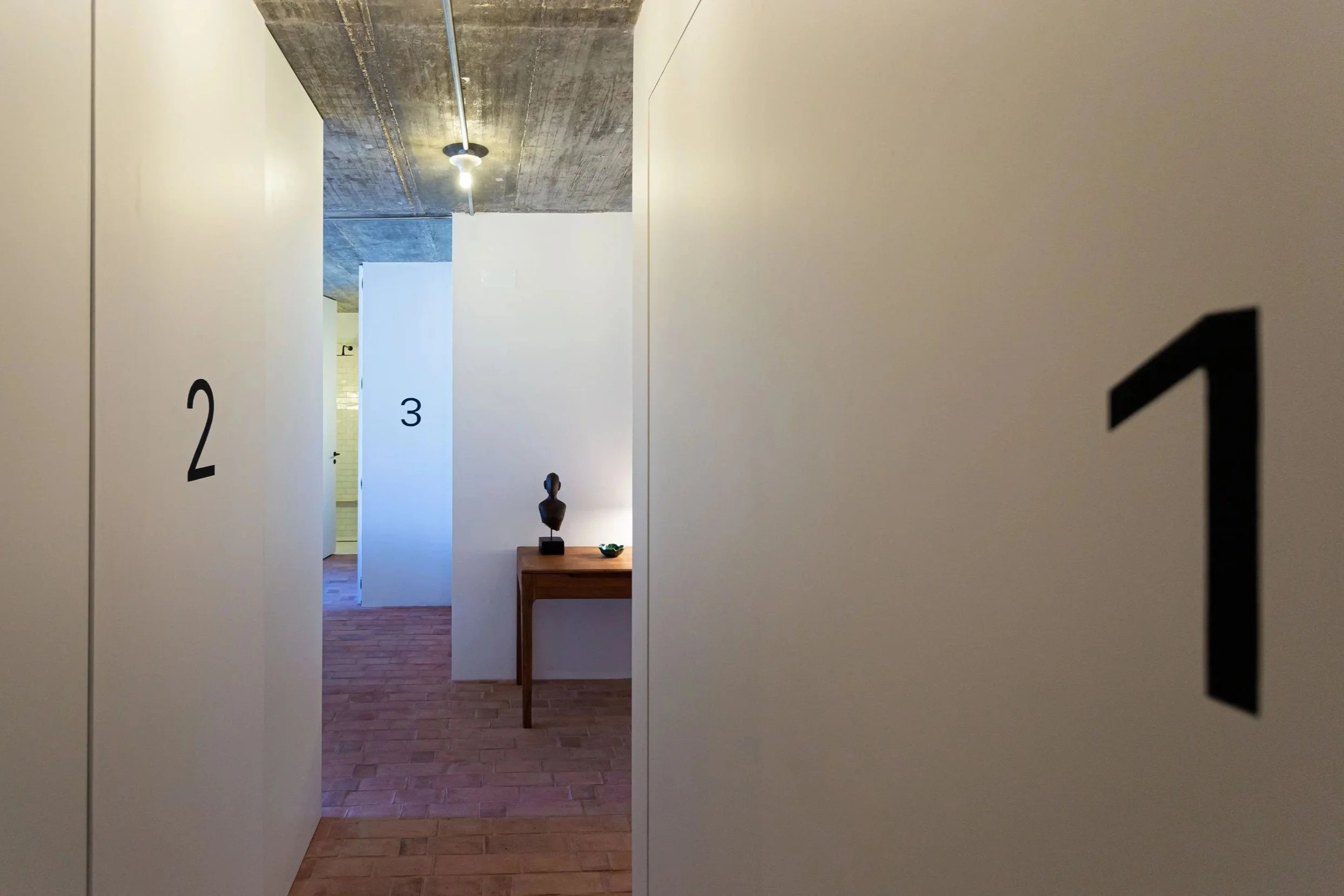
The interiors are designed minimally, while providing all that is necessary for comfort. The warm red tone of the clay tiles and exposed concrete provide texture, evoking a Portuguese industrial aesthetic. The three ensuite guest rooms, identified simply by hand drawn large numerals, are compact, yet generous, providing space to live and work, while maintaining a sense of spatial amplitude. The regularity of the plan is occasionally broken by the playful positioning of light fittings, adding informality.
A communal space opens from the entrance, with a centrally placed large marble kitchen island, crafted by a local stonemason, surrounded by natural wood stools and table. A small, compact laundry and storage room provides space for all maintenance requirements on site.
In a future reconversion into an apartment, the design allows for the omission of a guest room by simply removing a single partition wall, creating a large living space extending from the kitchen. Electrical wiring and plumbing have been planned so that no additional services work is required during this transformation.
The mini hotel reflects on architecture’s capacity to adapt to different uses over time, without excess or waste. Through handcrafted materials, local craftsmanship and clear spatial planning, the project describes how comfort and character can originate from simplicity. The design aims for a sustainable transformation, exposing the existing structure and showcasing Portuguese material culture.